Articles & Essays
Public philosophy, reflective essays, analytical writing and applied thought across truth, personhood, moral responsibility, technology, society, institutions, human formation and the questions that sit between scholarship and public life.
Public Philosophy & Intellectual Essays
The article archive sits between formal scholarship and public conversation: serious enough to preserve argument, accessible enough to remain part of ordinary intellectual life.
The essays of Syed Raheel Shahzad extend the philosophical work beyond books and research papers into questions encountered in ordinary life: how people form beliefs, how attention changes character, when loyalty becomes complicity, what responsibility survives delegation, whether measurement can contain human value, and how technology alters the conditions under which people know, judge and relate to one another.
These pieces are not intended as a substitute for scholarship. They serve a different intellectual purpose: to bring metaphysical, epistemological, moral, social and technological questions into a form that can be examined publicly without flattening them into slogans or reducing them to reaction.
Recurring Intellectual Themes
The archive is broad in subject but coherent in method: questions are approached through first principles, evidence, moral consequence and the structure beneath appearances.
Truth, Knowledge & Judgment
Evidence, certainty, interpretation, intellectual honesty, shared reality, testimony and the difference between reaction and understanding.
Personhood, Identity & Agency
Inherited labels, selfhood, attention, memory, choice, freedom, conscience, becoming and the disciplines through which a person is formed.
Responsibility, Loyalty & Conscience
Complicity, intention, consequence, obligation, moral courage, answerability and the limits of obedience or delegated action.
AI, Machines & Human Boundaries
Artificial intelligence, synthetic intimacy, machine mediation, delegated judgment, automation and the limits of technological substitution.
Conversation, Trust & Shared Reality
Public reasoning, disagreement, fragmentation, social trust, recognition, communication and the conditions under which people can still think together.
Institutions, Measurement & Consequence
Metrics, incentives, institutional memory, second-order effects, systems thinking and what gets lost when complexity is reduced to one visible measure.
Articles Archive
The complete public essay archive. Entries are presented without visible publication dates so the archive reads as a body of thought rather than a chronological news feed.

When Nothing Is Marked, Nothing Feels Sacred: Why Human Beings Still Need Ritual, Ceremony, and Thresholds
Philosophical Essay · Ritual, Ceremony, Meaning, Memory and Human TransitionWhen Nothing Is Marked, Nothing Feels Sacred: Why Human Beings Still Need Ritual, Ceremony, and ThresholdsEvents change our…
Read →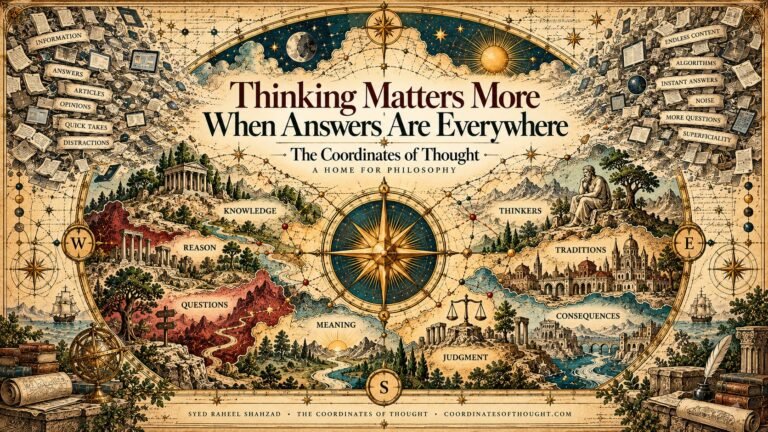
Thinking Matters More When Answers Are Everywhere
Answers are becoming easier to obtain. The harder task is deciding which answers deserve to become ours. By Syed Raheel Shahzad. · Artwork: Syed Raheel Shahzad /…
Read →
Before Love Comes Trust: Why the Heart Cannot Rest Where the Mind Must Stay Alert
Philosophical Essay · Trust, Love, Vulnerability, Reliability and the Architecture of Intimacy Before Love Comes Trust: Why the Heart Cannot Rest Where the Mind Must Stay Alert…
Read →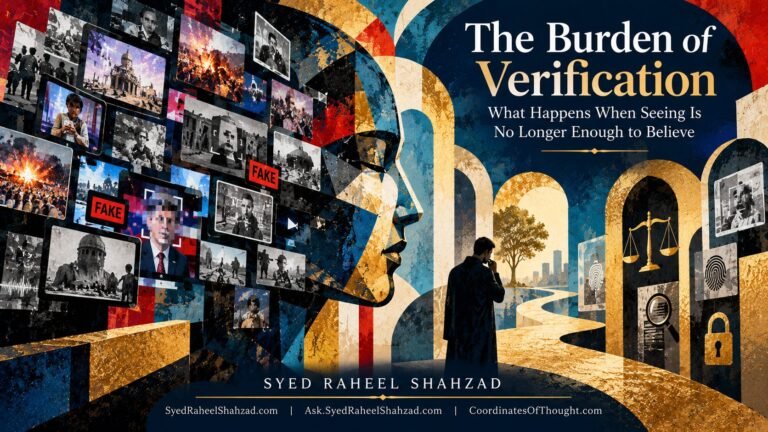
The Burden of Verification: What Happens When Seeing Is No Longer Enough to Believe
Philosophical Essay · Synthetic Media, Evidence, Provenance, Trust and the Future of Belief The Burden of Verification: What Happens When Seeing Is No Longer Enough to Believe…
Read →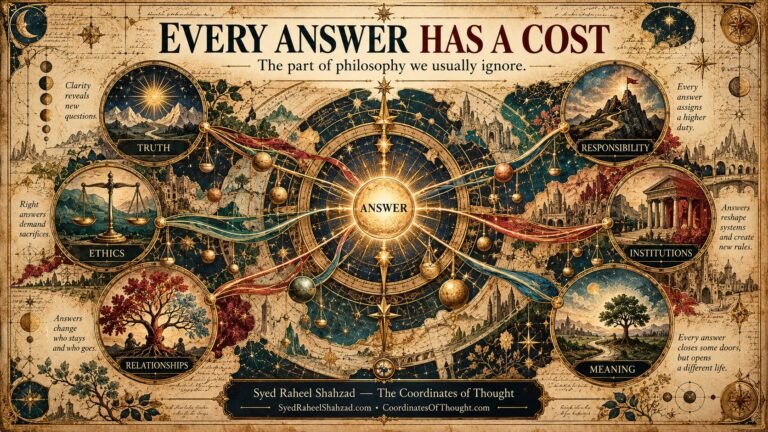
Every Answer Has a Cost: The Part of Philosophy We Usually Ignore
Every answer changes more than one question. Syed Raheel Shahzad examines the hidden intellectual, moral and practical costs of philosophical answers through The Coordinates of Thought. ·…
Read →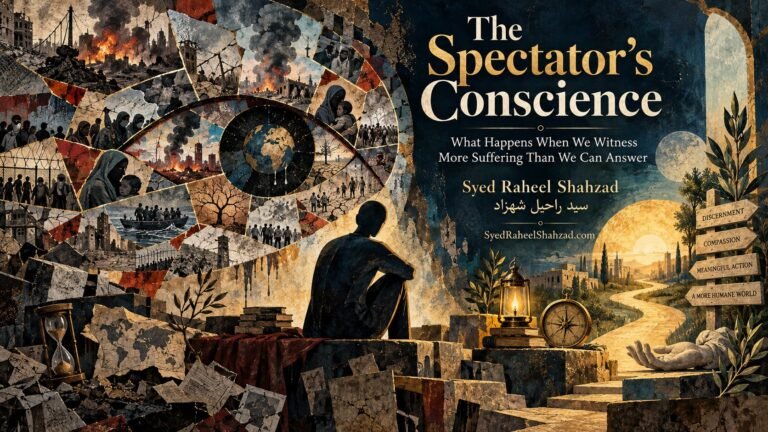
The Spectator’s Conscience: What Happens When We Witness More Suffering Than We Can Answer
Philosophical Essay · Moral Attention, Digital Exposure, Responsibility, Compassion and Human Limits The Spectator’s Conscience: What Happens When We Witness More Suffering Than We Can Answer A…
Read →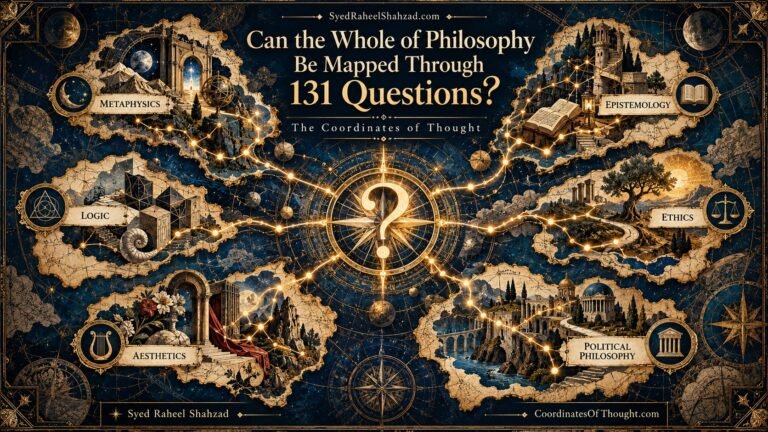
Can the Whole of Philosophy Be Mapped Through 131 Questions?
Can the whole of philosophy be mapped through questions? Syed Raheel Shahzad explores the 131-question architecture behind The Coordinates of Thought and CoordinatesOfThought.com. · Artwork: Syed Raheel…
Read →
Philosophy Needs a Home: Why the Great Questions Belong Together
The Coordinates of Thought brings philosophy’s great questions into one connected intellectual map. By Syed Raheel Shahzad. · Artwork: Syed Raheel Shahzad / The Syed Group ·…
Read →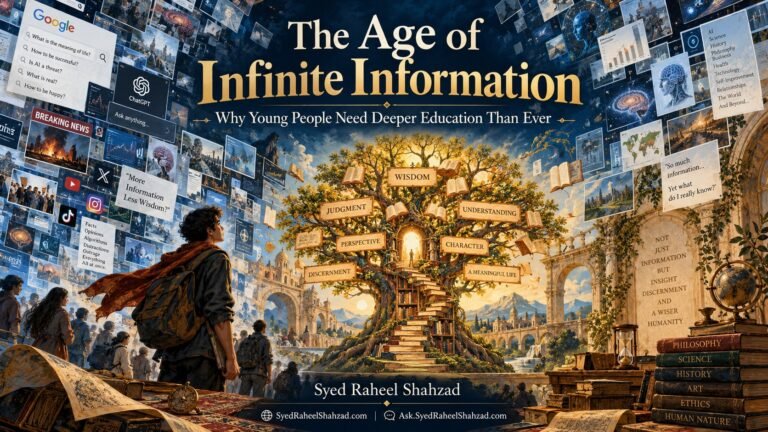
The Age of Infinite Information: Why Young People Need Deeper Education Than Ever
Philosophical Essay · Education, AI, Attention, Knowledge, Judgment and Human Formation The Age of Infinite Information: Why Young People Need Deeper Education Than Ever A philosophical inquiry…
Read →
The Hidden Price of Keeping Score: When Life Becomes a Ledger of What We Gave and What We Were Owed
Philosophical Essay · Reciprocity, Justice, Gift, Resentment, Gratitude and Human Relationship The Hidden Price of Keeping Score: When Life Becomes a Ledger of What We Gave and…
Read →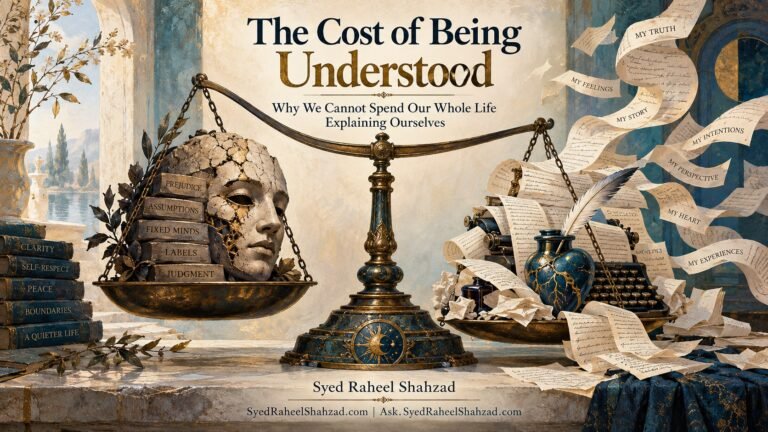
The Cost of Being Understood: Why We Cannot Spend Our Whole Life Explaining Ourselves
Philosophical Essay · Understanding, Interpretation, Recognition, Privacy and Self-Explanation The Cost of Being Understood: Why We Cannot Spend Our Whole Life Explaining Ourselves A philosophical inquiry into…
Read →
The Right to Become: Why a Human Being Must Be More Than Their Recorded Past
Philosophical Essay · Identity, Memory, Moral Change, Digital Permanence and Human Becoming The Right to Become: Why a Human Being Must Be More Than Their Recorded Past…
Read →
When Judgment Arrives Before Understanding
Syed Raheel Shahzad explores how the human mind can rush toward judgment before the full meaning of a person, event or situation is properly understood. · Artwork:…
Read →
When Availability Becomes an Obligation
Syed Raheel Shahzad examines how constant access can quietly transform a useful capability into a social obligation that consumes attention and autonomy. · Artwork: Syed Raheel Shahzad…
Read →
The Disappearance of Discipline: What We Lose When We Only Continue While We Feel Motivated
Philosophical Essay · Discipline, Motivation, Commitment, Habit and Self-Governance The Disappearance of Discipline: What We Lose When We Only Continue While We Feel Motivated A philosophical inquiry…
Read →
When Convenience Begins to Choose for Us
Syed Raheel Shahzad examines the point at which convenience stops supporting human choice and begins quietly determining how we live. · Artwork: Syed Raheel Shahzad / The…
Read →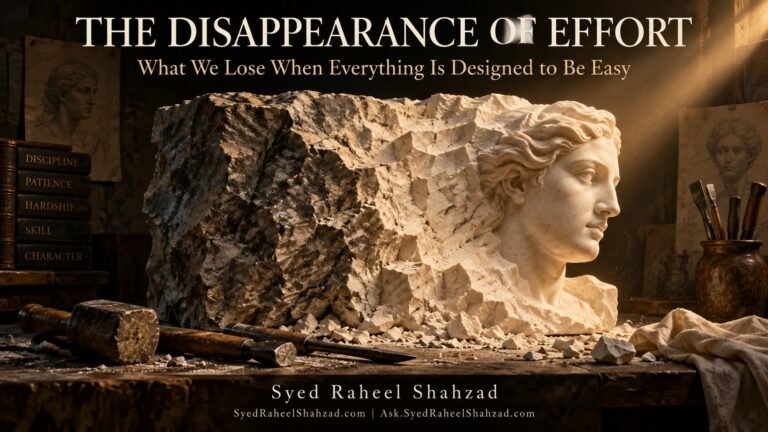
The Disappearance of Effort: What We Lose When Everything Is Designed to Be Easy
Philosophical Essay · Effort, Resistance, Friction, Capability and Human Formation The Disappearance of Effort: What We Lose When Everything Is Designed to Be Easy A philosophical inquiry…
Read →
Must We Have an Opinion on Everything?
Syed Raheel Shahzad examines the tension between personal autonomy and the social pressure to justify one’s choices, identity and private life. · Artwork: Syed Raheel Shahzad /…
Read →
The Disappearance of Patience: What We Lose When Nothing Is Allowed to Take Time
Philosophical Essay · Patience, Time, Immediacy, Becoming and Human Agency The Disappearance of Patience: What We Lose When Nothing Is Allowed to Take Time A philosophical inquiry…
Read →
When Does Identity Become a Prison?
Syed Raheel Shahzad explores the point at which identity stops providing coherence and begins restricting who a person is allowed to become. · Artwork: Syed Raheel Shahzad…
Read →
The Disappearance of Uncertainty: What We Lose When We Believe Everything Must Be Known Before We Can Move
Philosophical Essay · Uncertainty, Knowledge, Prediction, Courage and Human Agency The Disappearance of Uncertainty: What We Lose When We Believe Everything Must Be Known Before We Can…
Read →
Must We Have an Opinion on Everything?
Syed Raheel Shahzad examines why intellectual maturity requires distinguishing knowledge, belief, assumption and uncertainty before reaching a conclusion. · Artwork: Syed Raheel Shahzad / The Syed Group…
Read →
The Disappearance of Trust: What We Lose When Every Relationship Begins With Suspicion
Philosophical Essay · Trust, Suspicion, Vulnerability, Evidence and Human Relationship The Disappearance of Trust: What We Lose When Every Relationship Begins With Suspicion A philosophical inquiry into…
Read →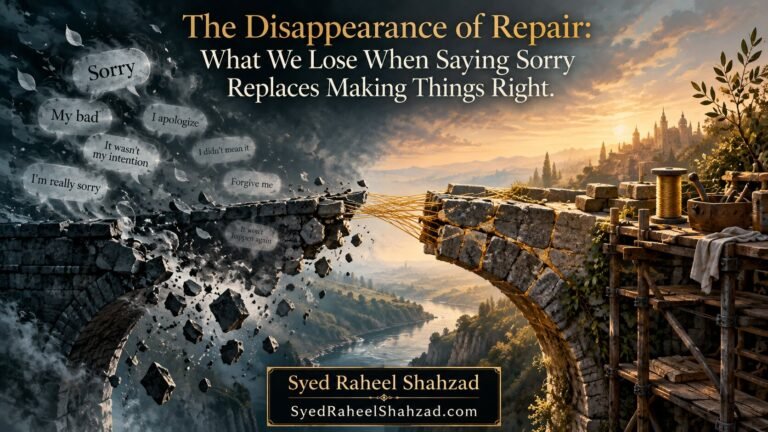
The Disappearance of Repair: What We Lose When Saying Sorry Replaces Making Things Right
Philosophical Essay · Repair, Responsibility, Harm, Trust and Moral Continuity The Disappearance of Repair: What We Lose When Saying Sorry Replaces Making Things Right A philosophical inquiry…
Read →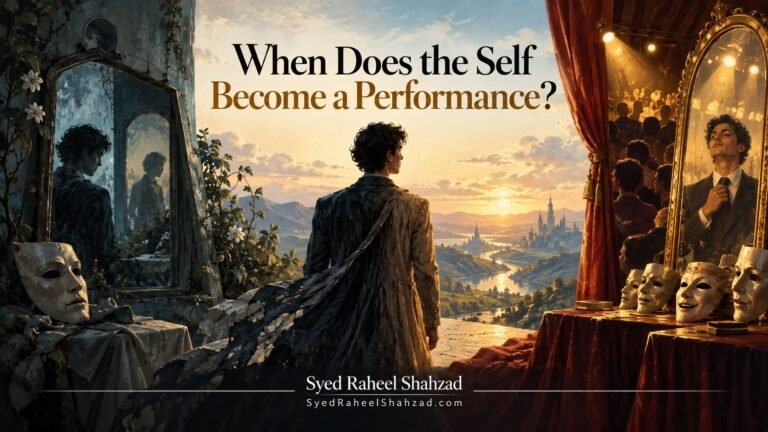
When Does the Self Become a Performance?
Syed Raheel Shahzad examines the boundary between authentic self-expression and a life increasingly shaped by audiences, recognition, image and performance. · Artwork: Syed Raheel Shahzad / The…
Read →
Must We Always Become Better?
Syed Raheel Shahzad examines when self-improvement strengthens human potential—and when the endless demand to become better begins to turn against the self. · Artwork: Syed Raheel Shahzad…
Read →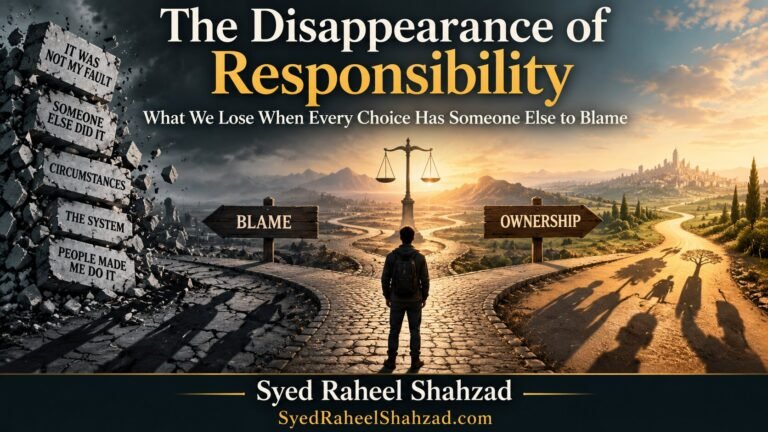
The Disappearance of Responsibility: What We Lose When Every Choice Has Someone Else to Blame
Philosophical Essay · Responsibility, Agency, Blame, Explanation and Answerability The Disappearance of Responsibility: What We Lose When Every Choice Has Someone Else to Blame A philosophical inquiry…
Read →
Does More Choice Make Us More Free?
Syed Raheel Shahzad examines whether greater choice necessarily produces greater freedom—or whether too many options can weaken clarity, agency and meaningful decision-making. · Image: Syed Raheel Shahzad…
Read →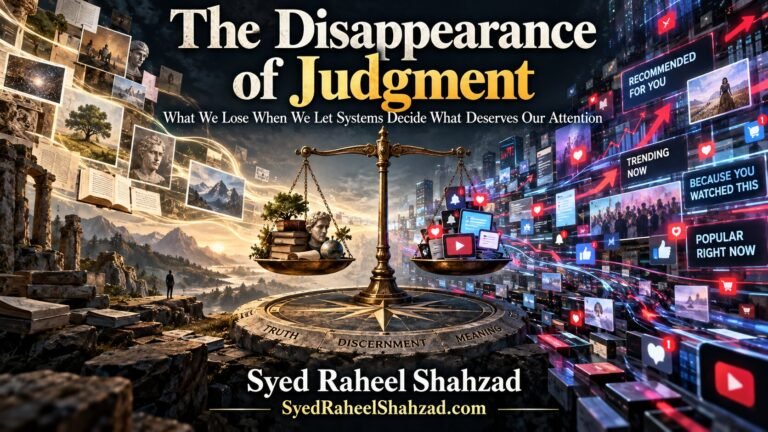
The Disappearance of Judgment: What We Lose When We Let Systems Decide What Deserves Our Attention
Philosophical Essay · Inner Authority, Judgment, Validation, Recognition and Human Formation The Disappearance of Inner Authority: What We Lose When We Need Others to Validate Every Choice…
Read →
What Do We Lose When Everything Becomes Easy?
Syed Raheel Shahzad examines the philosophy of convenience and asks when removing difficulty improves human life—and when it begins to weaken capability, resilience and agency. · Image:…
Read →
The Disappearance of Inner Authority: What We Lose When We Need Others to Validate Every Choice
Philosophical Essay · Inner Authority, Judgment, Validation, Recognition and Human Formation The Disappearance of Inner Authority: What We Lose When We Need Others to Validate Every Choice…
Read →
When Does Speed Become a Loss?
Syed Raheel Shahzad examines when greater speed stops serving human progress and begins to reduce patience, judgment, depth, reflection and meaning. · Image: Syed Raheel Shahzad /…
Read →
The Disappearance of Privacy: What We Lose When Every Part of Life Becomes Visible
Philosophical Essay · Privacy, Selfhood, Visibility, Observation and Human Formation The Disappearance of Privacy: What We Lose When Every Part of Life Becomes Visible A philosophical inquiry…
Read →
Who Owns Your Attention?
Syed Raheel Shahzad examines attention as a foundation of human agency and asks what happens when the environments around us become increasingly skilled at capturing it. ·…
Read →
The Disappearance of Solitude: What We Lose When We Are Never Truly Alone
Philosophical Essay · Solitude, Selfhood, Digital Presence, AI and Human Formation The Disappearance of Solitude: What We Lose When We Are Never Truly Alone A philosophical inquiry…
Read →
Can a Machine Be a Friend?
Syed Raheel Shahzad examines whether artificial intelligence can participate in friendship—or whether simulated understanding creates a fundamentally different category of human experience. · Image: Syed Raheel Shahzad…
Read →
The Disappearance of Boredom: What We Lose When Every Empty Moment Must Be Filled
Philosophical Essay · Attention, Silence, Boredom, Technology and Human Formation The Disappearance of Boredom: What We Lose When Every Empty Moment Must Be Filled A philosophical reflection…
Read →
Can Responsibility Be Delegated to a Machine?
Syed Raheel Shahzad examines whether humans can delegate increasingly complex actions to intelligent systems without also surrendering moral answerability for what those systems do. · Image: Syed…
Read →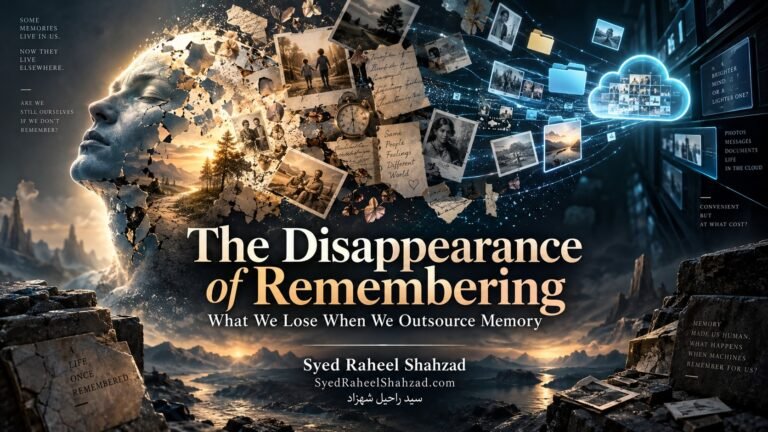
The Disappearance of Remembering: What We Lose When Memory Lives Outside Us
Philosophical Essay · Memory, Attention, Identity, Technology and Human Formation The Disappearance of Remembering: What We Lose When Memory Lives Outside Us A philosophical inquiry into what…
Read →
Can We Live Together Without a Shared Reality?
Syed Raheel Shahzad examines why disagreement can remain productive only when people still share enough common reality to test claims, evaluate evidence and correct error. · Image:…
Read →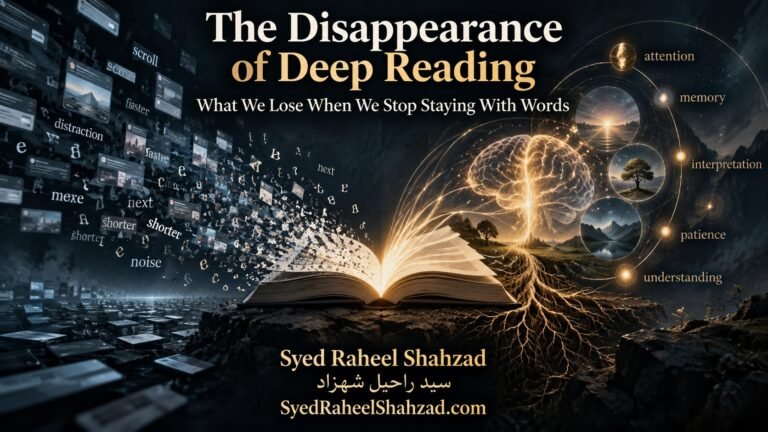
The Disappearance of Deep Reading: What We Lose When We Stop Staying With Words
Philosophical Essay · Reading, Attention, Memory, Interpretation and the Reflective Life The Disappearance of Deep Reading: What We Lose When We Stop Staying With Words A philosophical…
Read →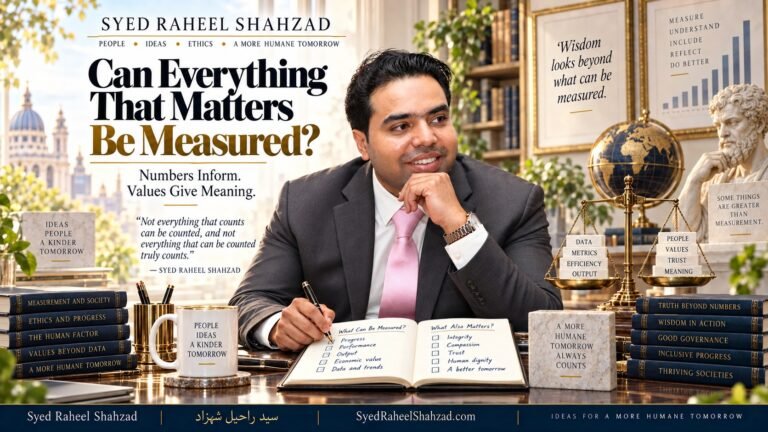
Can Everything That Matters Be Measured?
Syed Raheel Shahzad examines the philosophical limits of measurement and asks when useful numbers begin to replace the deeper realities they were meant to represent. · Image:…
Read →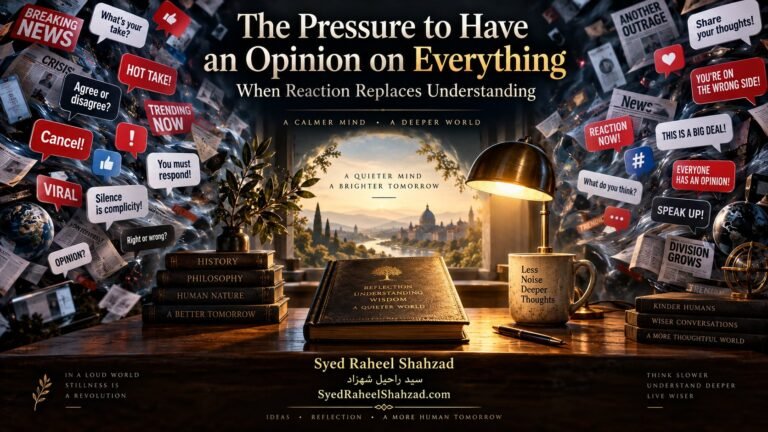
The Pressure to Have an Opinion on Everything: When Reaction Replaces Understanding
Philosophical Essay · Judgment, Knowledge, Uncertainty, Intellectual Humility and Human Agency The Pressure to Have an Opinion on Everything: When Reaction Replaces Understanding A philosophical inquiry into…
Read →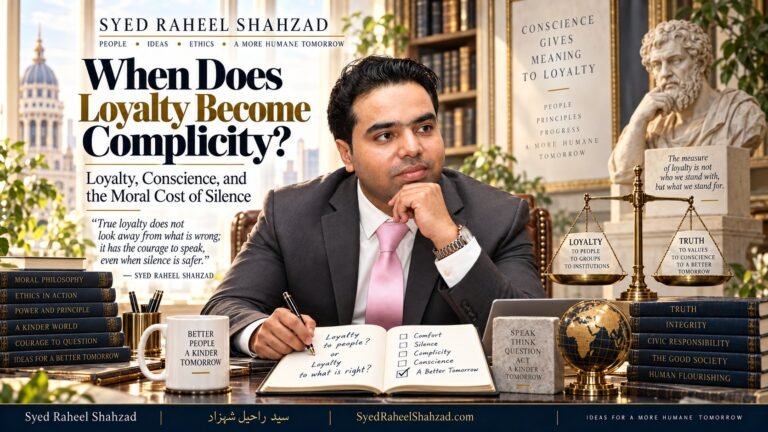
When Does Loyalty Become Complicity?
Syed Raheel Shahzad examines the point at which loyalty stops being a virtue and becomes participation in wrongdoing through silence, obedience or protected allegiance. · Image: Syed…
Read →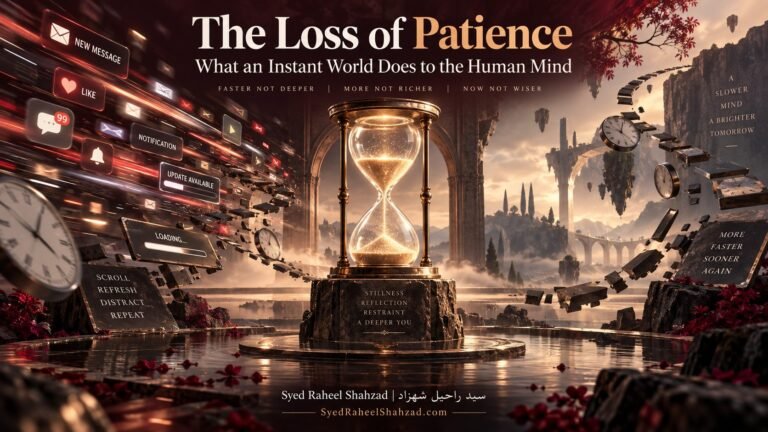
The Loss of Patience: What an Instant World Does to the Human Mind
Philosophical Essay · Patience, Time, Desire, Attention and Human Agency The Loss of Patience: What an Instant World Does to the Human Mind A philosophical inquiry into…
Read →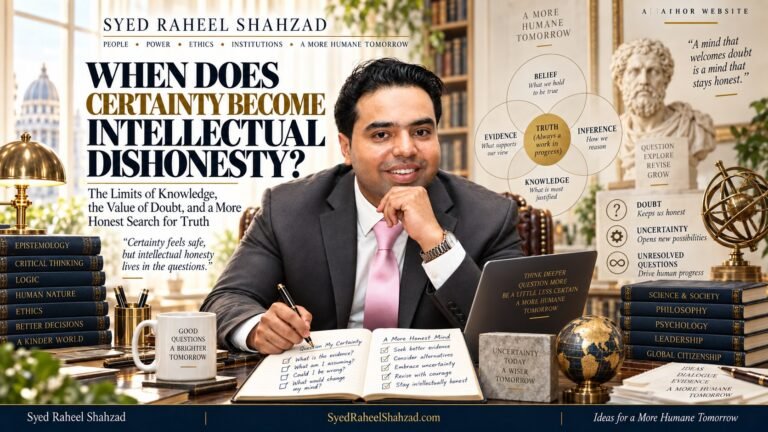
When Does Certainty Become Intellectual Dishonesty?
Syed Raheel Shahzad examines the moral boundary between justified confidence and the intellectual dishonesty of claiming more certainty than evidence permits. · Image: Syed Raheel Shahzad /…
Read →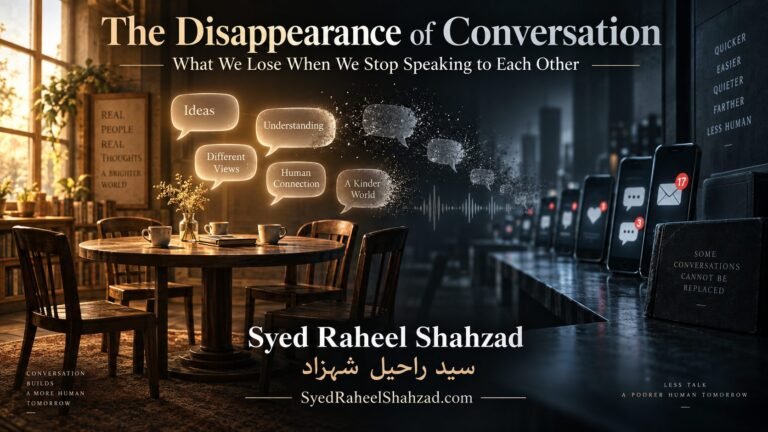
The Disappearance of Conversation: What We Lose When We Stop Speaking to Each Other
Philosophical Essay · Conversation, Presence, Recognition and Human Relation The Disappearance of Conversation: What We Lose When We Stop Speaking to Each Other A philosophical inquiry into…
Read →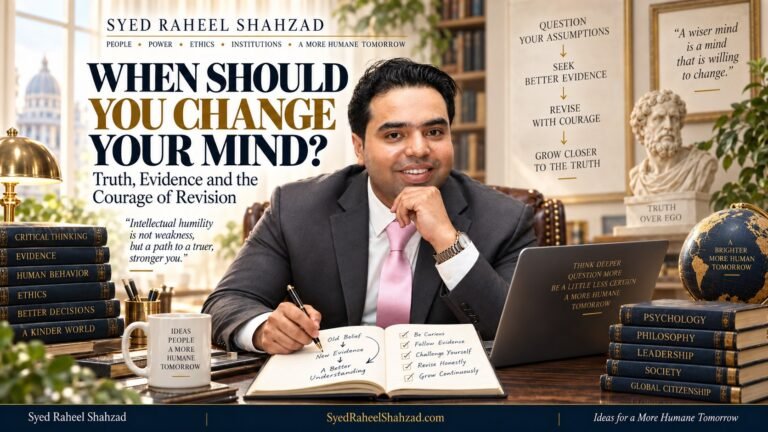
When Should You Change Your Mind?
Syed Raheel Shahzad examines why changing your mind can be an act of intellectual strength when better evidence challenges an older belief. · Image: Syed Raheel Shahzad…
Read →
When Everything Must Be Useful: The Moral Cost of Turning Life Into Output
Philosophical Essay · Productivity, Utility, Leisure and Human Worth When Everything Must Be Useful: The Moral Cost of Turning Life Into Output A philosophical inquiry into what…
Read →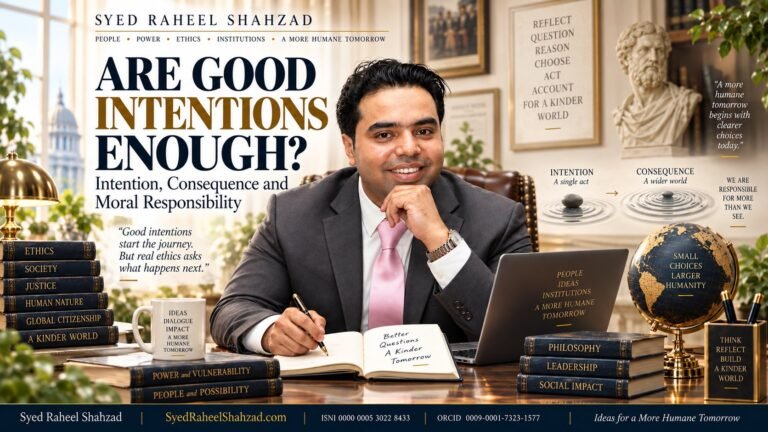
Are Good Intentions Enough?
Syed Raheel Shahzad examines a central moral question: do good intentions excuse harmful outcomes, or do they deepen our responsibility to learn, improve and act more wisely?…
Read →Continue Through the Intellectual Record
Different forms of writing serve different functions. Use the route that matches the kind of argument or evidence you are looking for.
Scholarly & Public Identity
Official profiles and persistent identifiers support attribution, discovery, citation and independent verification across the public and scholarly record.