The Disappearance of Remembering: What We Lose When Memory Lives Outside Us
Philosophical Essay · Memory, Attention, Identity, Technology and Human Formation
The Disappearance of Remembering: What We Lose When Memory Lives Outside Us
A philosophical inquiry into what happens when storage becomes effortless, recollection becomes optional, and the inner discipline of remembering slowly gives way to external archives.
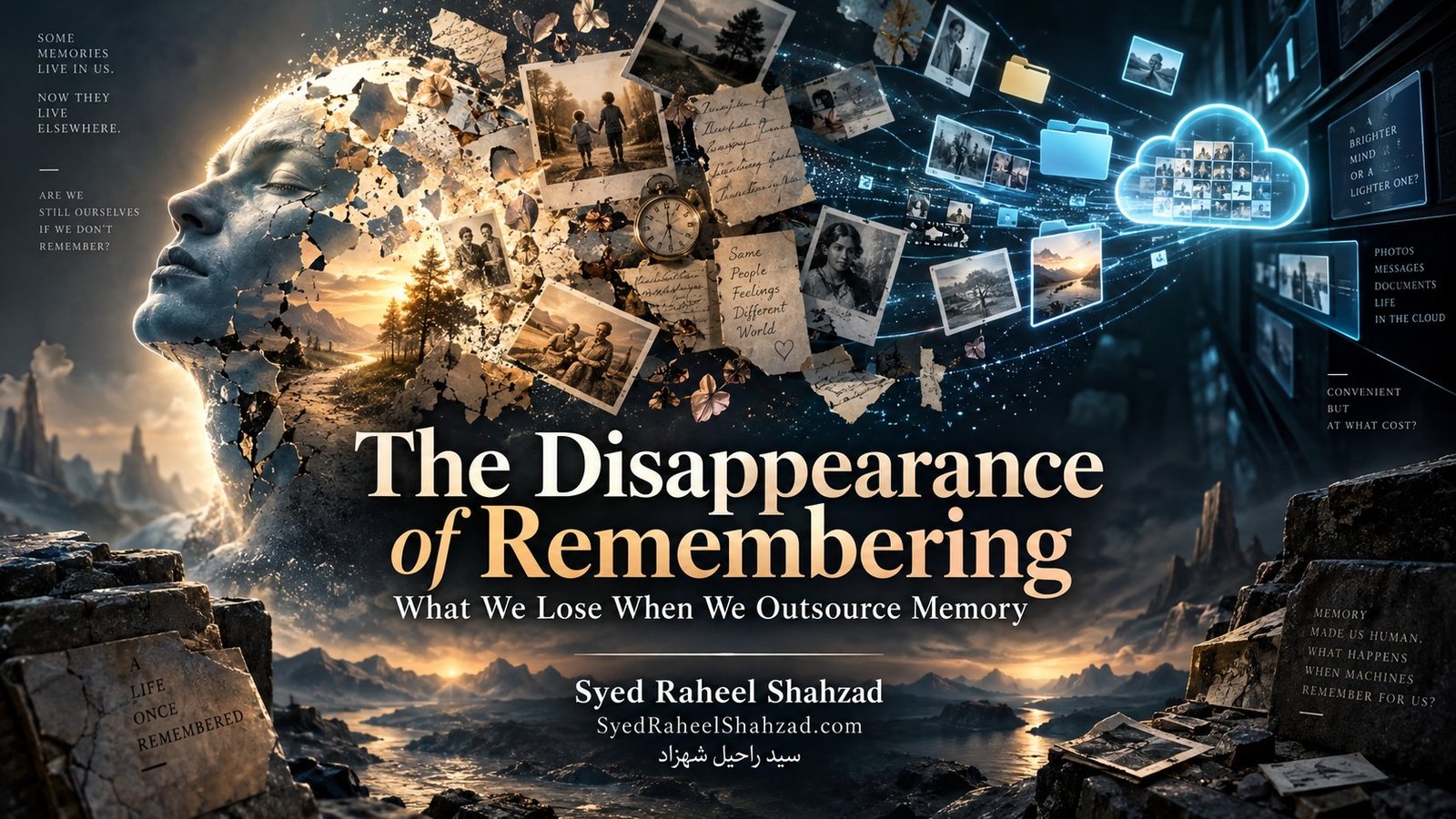
Memory is more than information kept somewhere
We often speak as if memory were a storage problem. If something can be saved, backed up and found again, we assume it has been preserved. Yet human remembering is not identical to external storage. A file can be retained without being lived. A photograph can remain accessible without remaining meaningful. A message can be archived without being inwardly digested.
The distinction matters because memory does not merely hold facts. It shapes character. The memories we actively carry influence judgment, loyalty, gratitude, caution and identity. To remember a promise is not merely to retain a sentence; it is to remain morally tied to it. To remember a wound is not merely to recall an event; it is to continue interpreting the self through what happened. To remember a lesson is to make past experience available for present wisdom.
When memory is reduced to storage, the human interior becomes easier to document and harder to deepen.
Digital systems are extraordinarily good at preserving traces. But traces are not the same as remembrance. Remembrance is an active relation between a person and what has mattered. It requires selection, interpretation and return.
The convenience of saving has changed the discipline of attention
The more effortless saving becomes, the less pressure we feel to attend in the first place. A person who believes that every moment can be captured later often becomes less present to the moment now. We photograph meals, conversations, journeys and even grief, sometimes not because we are deeply inhabiting them, but because we are anxious not to lose them.
Yet memory is not strengthened by anxious capture alone. It is strengthened by attention. What the mind notices, organizes and revisits has a chance of becoming part of the self. What it merely records may remain external.
This helps explain a paradox of modern life: we possess more documented moments than previous generations, yet many people feel that experience passes through them too quickly. The problem is not that nothing is being preserved. The problem is that too little is being inwardly processed.
What forgetting used to teach
Human memory has always been selective. That selectivity is not merely a defect. It is also a teacher. Because we cannot carry everything equally, we are forced to discover what should remain. Rehearsal, reflection and retelling become acts of valuation. What we repeat, we rank. What we return to, we honor. What we cannot remember at all often reveals the thinness of our original attention.
When external systems remove much of the pressure to remember, they also weaken the small disciplines through which memory becomes meaningful. The mind becomes a point of access rather than a place of formation. Instead of asking, “What must I carry within me?” we ask, “Where did I save that?”
That question is sometimes practical and harmless. But as it expands, it alters us. It makes recollection feel less like an inner faculty to be cultivated and more like a search function to be used.
Memory has moral weight
The loss is not only cognitive. It is ethical. Communities are held together by remembered obligations. Families endure by retold stories. Institutions gain maturity when they remember their failures and preserve lessons rather than merely storing reports.
At the personal level, memory protects seriousness. A person who remembers consequences does not approach choice with the same shallowness as someone who begins each day as if history had evaporated. Memory is one of the ways time instructs conscience.
This is why amnesia is tragic even when information survives elsewhere. A life is not fully recovered by handing a person a folder about themselves. The difference between being told and inwardly remembering is the difference between data and identity.
To forget too easily is to risk becoming morally uneducated by one’s own life.
The archive cannot replace the interior
None of this requires hostility toward technology. External memory is often necessary and good. It expands access, preserves evidence, protects scholarship and relieves the mind of many routine burdens. The problem begins when assistance quietly becomes substitution.
A healthy relation to technology should strengthen the human interior rather than hollow it out. Devices should help us remember better, not excuse us from the effort of remembering at all. The point of a calendar is not to eliminate commitment but to support it. The point of notes is not to remove understanding but to deepen it. The point of preservation is not to make human recollection irrelevant.
Recovering a more living memory
The remedy is not nostalgia. It is practice. We recover memory by returning to acts that make attention and recollection personal again: telling stories without checking devices, learning passages by heart, writing reflections after important events, revisiting old experiences to ask what they taught, and allowing fewer moments to be captured so that more moments can be inhabited.
We also recover memory by recognizing that forgetting everything painful or difficult is not the goal. Some memories remain because they educate. A person becomes wiser partly by remaining answerable to what life has already shown.
Conclusion
A world in which everything can be saved tempts us to believe that nothing meaningful can really be lost. But something can be lost: the habit of inward remembrance itself. We may still possess the record while losing the faculty that turns record into wisdom.
The future does not need less preservation. It needs more human depth. We must learn again that remembering is not merely about having access to the past. It is about allowing the past to continue forming the person who must now live responsibly in the present.
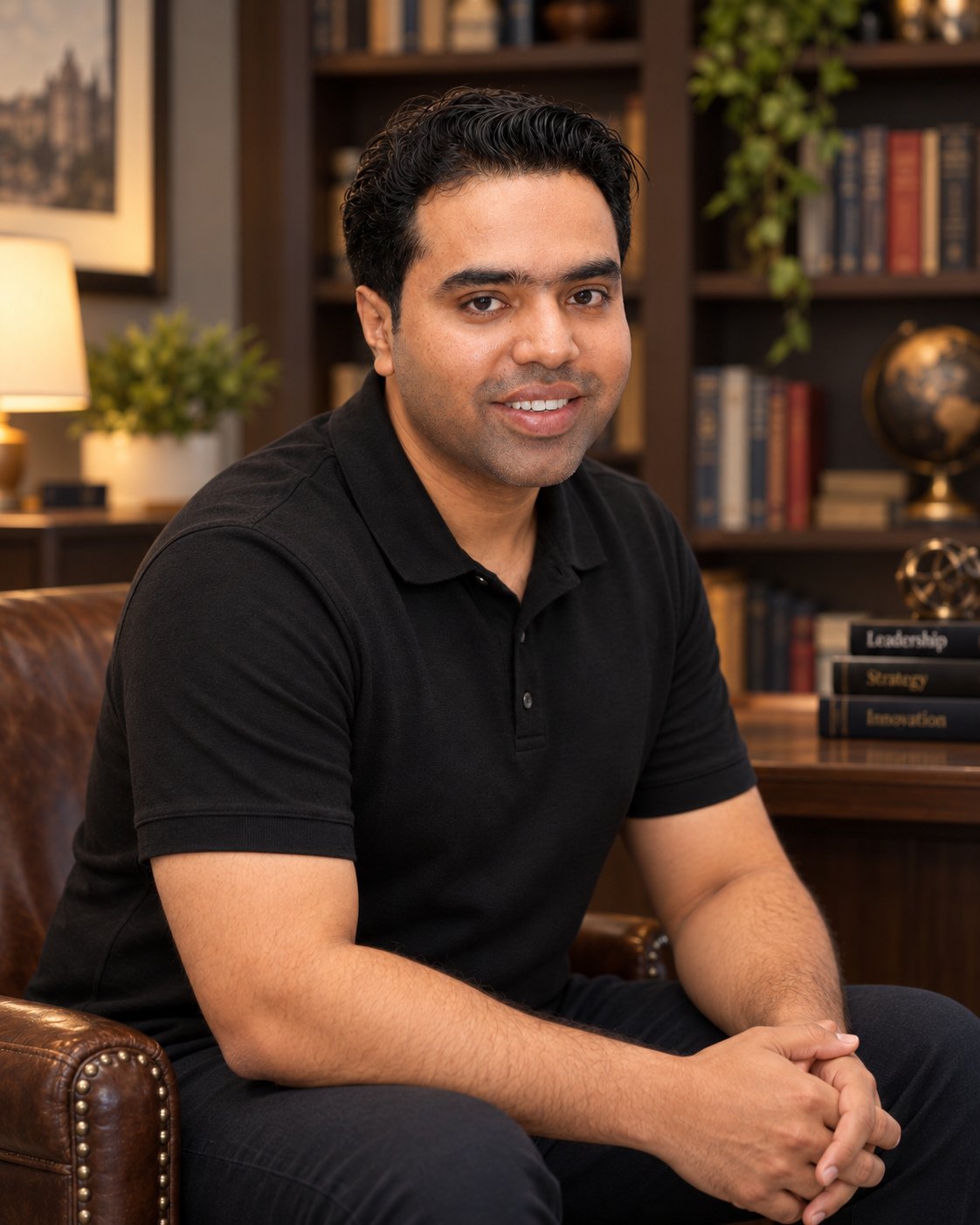
Syed Raheel Shahzad — Philosopher & Author
Published works include The Source of Truth System™, The Architect’s Protocol, the Qur’anic Coherence System and other philosophical and civilizational works.
Syed Raheel Shahzad — سيد راحيل شهزاد — is an author, philosopher, Founder & Group CEO, business strategist, systems thinker and architect.
ISNI 0000 0005 3022 8433 · ORCID 0009-0001-7323-1577 · Google Scholar nRC4eGEAAAAJ
Publisher / Imprint: The Syed Group · ISNI 0000 0005 3027 5408 · Ringgold 850493