Philosophy and Society

  • | | |

    The Silent Claim of the Future: Power, Irreversibility and Responsibility to the Unborn

    Philosophical Essay · 29 August 2026 · Power, Time and Intergenerational Responsibility The Silent Claim of the Future: Power, Irreversibility and Responsibility to the Unborn Those who cannot participate in our choices may become their most permanent subjects. The Silent Claim of the Future: Power, Irreversibility and Responsibility to the Unborn — Syed Raheel Shahzad…


  • | | |

    Who Taught You What to Want? The Hidden Architecture of Human Desire

    Who Taught You What to Want? — a philosophical essay on desire, imitation, status, social influence and the hidden forces shaping what people pursue. By Syed Raheel Shahzad — سيد راحيل شهزاد. Research Update · Philosophy of Desire · Human Nature · Social Formation · 28 August 2026 Who Taught You What to Want? The…

  • | | |

    The Moral Limits of Gratitude: Gift, Debt and the Right to Remain Free

    Philosophical Essay · 28 August 2026 · Gift, Debt, Freedom and Moral Boundaries The Moral Limits of Gratitude: Gift, Debt and the Right to Remain Free A gift may deserve remembrance, respect and reciprocity. It never purchases ownership over another person’s future. The Moral Limits of Gratitude: Gift, Debt and the Right to Remain Free…

  • | | |

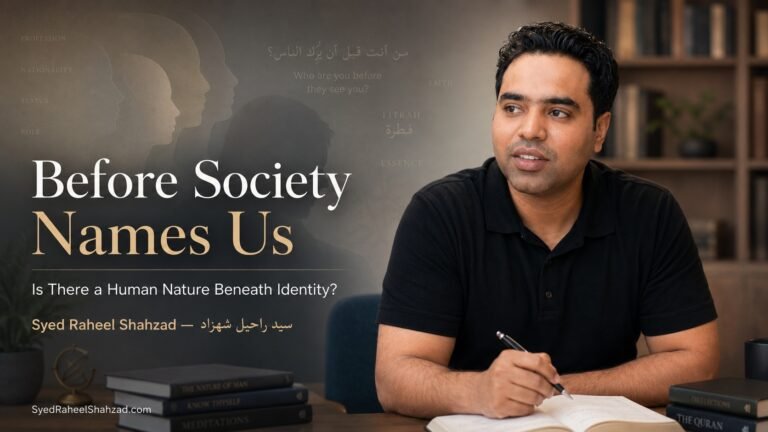
    Human Nature Beneath Identity | Syed Raheel Shahzad

    Before Society Names Us — a philosophical inquiry into fitrah, human nature, identity, social formation and what remains beneath inherited labels. By Syed Raheel Shahzad — سيد راحيل شهزاد. Research Update · Philosophical Anthropology · Fitrah · Identity · 27 August 2026 Before Society Names Us: Is There a Human Nature Beneath Identity? The human…

  • | | | |

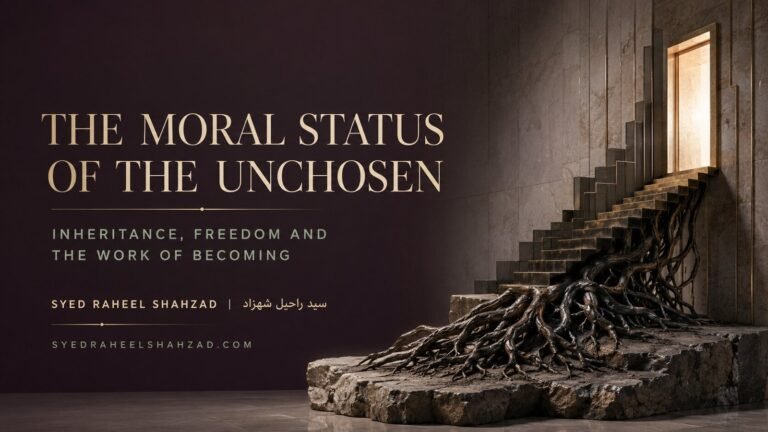
    The Moral Status of the Unchosen: Inheritance, Freedom and the Work of Becoming

    Philosophical Essay · 27 August 2026 · Inheritance, Agency and Moral Responsibility The Moral Status of the Unchosen: Inheritance, Freedom and the Work of Becoming We do not choose the forces that begin forming us. Moral life begins when we decide what those forces will be permitted to continue through us. The Moral Status of…

  • | | | |

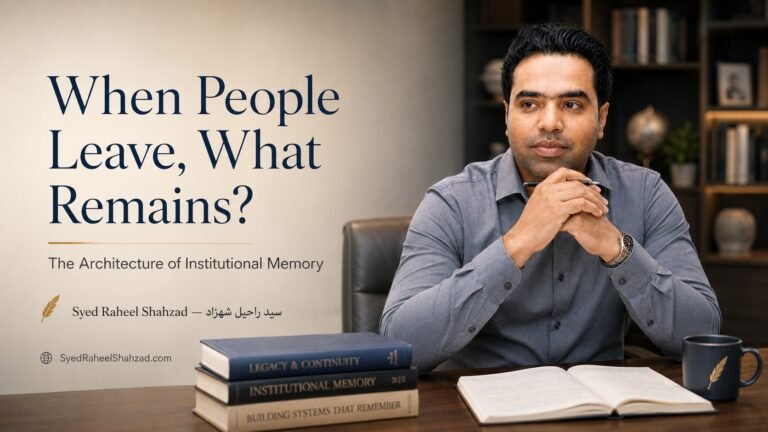
    When People Leave, What Remains? The Architecture of Institutional Memory

    When People Leave, What Remains? — a research essay on institutional memory, continuity and how knowledge survives beyond individuals. By Syed Raheel Shahzad — سيد راحيل شهزاد. Research Update · Institutional Memory · Systems Thinking · Organizational Learning · 26 August 2026 When People Leave, What Remains? The Architecture of Institutional Memory An institution begins…

  • | | | | | |

    The Distance Between Knowing and Admitting: The Architecture of Self-Deception

    Philosophical Essay · 26 August 2026 · Self-Deception, Conscience and Moral Knowledge The Distance Between Knowing and Admitting: The Architecture of Self-Deception Self-deception does not always hide truth. It often creates distance between what the mind recognizes, what the self admits and what responsibility requires. Self-deception manages the distance between recognition and consequence. — Syed…

  • | | | | |

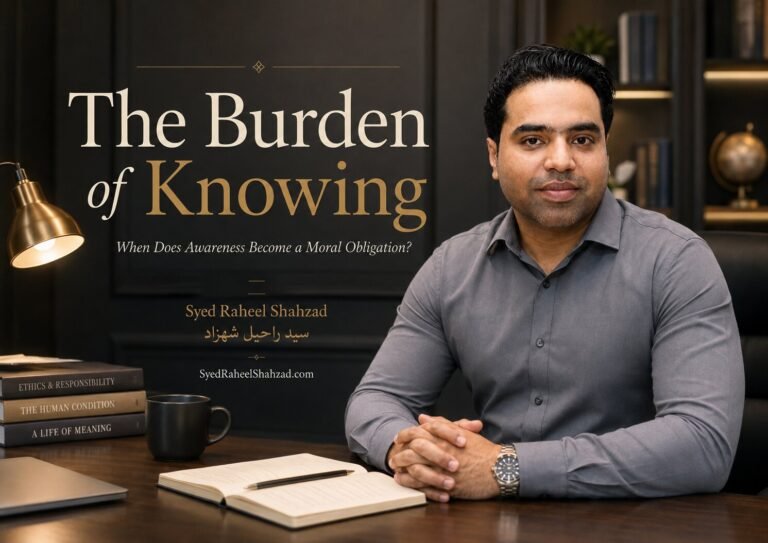
    The Burden of Knowing: When Does Awareness Become a Moral Obligation?

    The Burden of Knowing — a philosophical research essay on awareness, moral obligation, knowledge, capacity and human answerability. By Syed Raheel Shahzad — سيد راحيل شهزاد. Research Update · Moral Philosophy · Knowledge · Obligation · 25 August 2026 The Burden of Knowing: When Does Awareness Become a Moral Obligation? Knowledge changes moral position because…

  • | | |

    The Open Door of the Mind: When Conviction Becomes Dogma

    Philosophical Essay · 25 August 2026 · Belief, Truth and Intellectual Freedom The Open Door of the Mind: When Conviction Becomes Dogma A conviction may have a strong center. Dogma begins when the mind seals every legitimate door through which truth could correct it. A conviction says, ‘I will stand here until better reasons move…

  • | | | |

    The First Consequence Is Rarely the Last: Why Moral Judgment Must Think in Systems

    The First Consequence Is Rarely the Last — a philosophical research essay on second-order consequences, systems thinking, moral judgment and responsibility. By Syed Raheel Shahzad — سيد راحيل شهزاد. Research Update · Systems Thinking · Moral Philosophy · Second-Order Effects · 24 August 2026 The First Consequence Is Rarely the Last: Why Moral Judgment Must…