Syed Raheel Shahzad

  • | | |

    The Disappearance of Conversation: What We Lose When We Stop Speaking to Each Other

    Philosophical Essay · Conversation, Presence, Recognition and Human Relation The Disappearance of Conversation: What We Lose When We Stop Speaking to Each Other A philosophical inquiry into why spoken conversation remains more than a communication method: it is a practice of presence through which people learn recognition, disagreement, repair and shared meaning. By Syed Raheel…
  • | | |

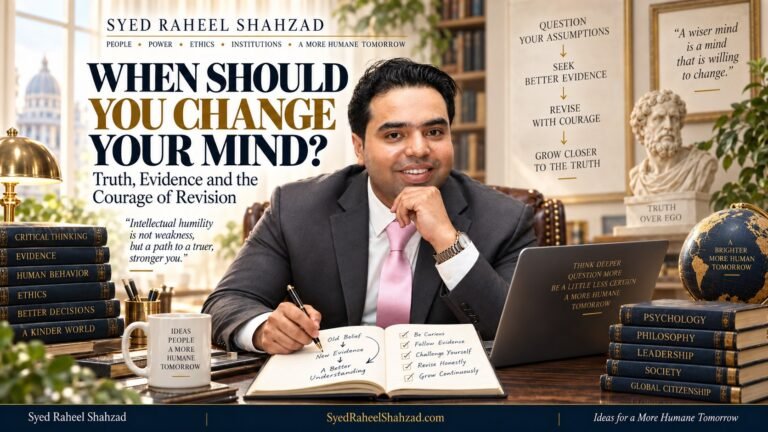
    When Should You Change Your Mind?

    Syed Raheel Shahzad examines why changing your mind can be an act of intellectual strength when better evidence challenges an older belief. · Image: Syed Raheel Shahzad / The Syed Group · All rights reserved. Philosophy · Truth · Intellectual Humility · Belief Revision When Should You Change Your Mind? A philosophical inquiry into why…

  • | | |

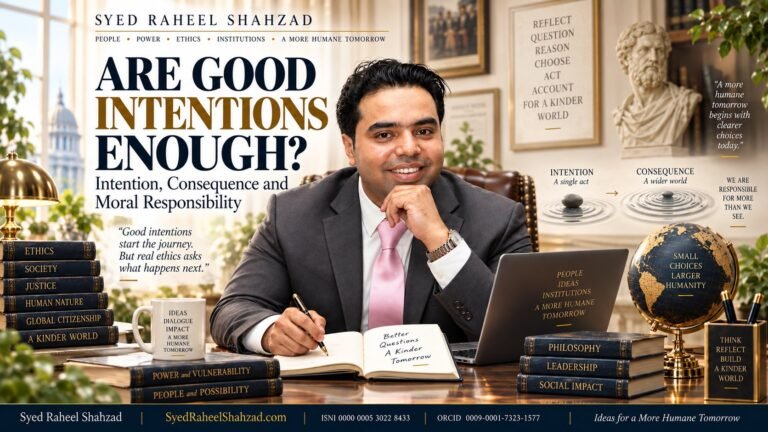
    Are Good Intentions Enough?

    Syed Raheel Shahzad examines a central moral question: do good intentions excuse harmful outcomes, or do they deepen our responsibility to learn, improve and act more wisely? · Image: Syed Raheel Shahzad / The Syed Group · All rights reserved. Philosophy · Moral Responsibility · Intention and Consequence Are Good Intentions Enough? A philosophical inquiry…

  • | | |

    The Cost of Feeling Behind: When Life Becomes a Race You Never Chose

    Philosophical Essay · Social Timelines, Comparison, Progress and Human Worth The Cost of Feeling Behind: When Life Becomes a Race You Never Chose A philosophical inquiry into why modern life feels like a race, how social clocks become internal judgments, and why progress must be separated from human worth. The Cost of Feeling Behind: When…

  • | | |

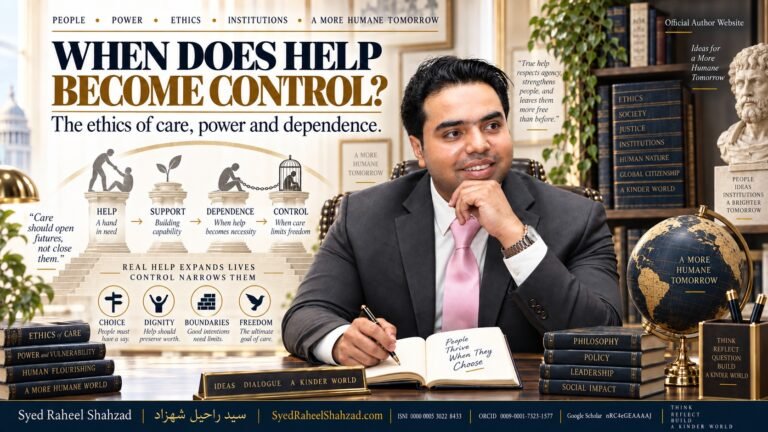
    When Does Help Become Control?

    Syed Raheel Shahzad explores the moral point at which care stops expanding another person’s capacity and begins making itself necessary. Research Update · Agency · Dependence · Power · 17 September 2026 When Does Help Become Control? Help is not morally good merely because it begins with compassion. Its deeper test is what becomes of…

  • | | |

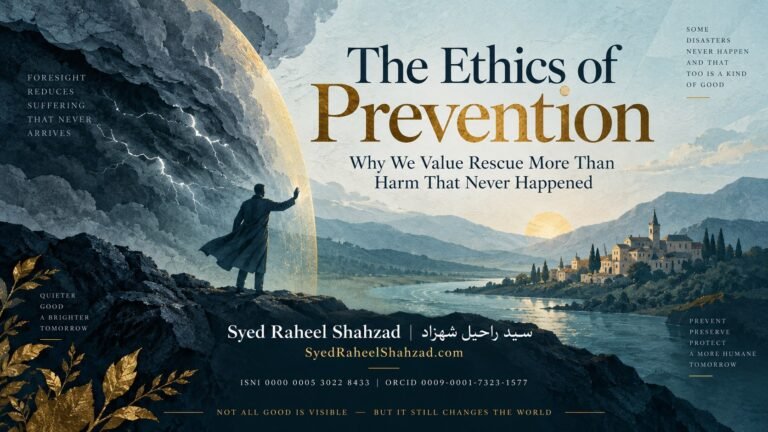
    The Ethics of Prevention: Why We Value Rescue More Than Harm That Never Happened

    Philosophical Essay · Prevention, Counterfactual Value, Foresight and Moral Recognition The Ethics of Prevention: Why We Value Rescue More Than Harm That Never Happened A philosophical inquiry into why prevention is morally undervalued, even when some of the greatest good in human life is the harm that never happens. The Ethics of Prevention: Why We…

  • | | |

    The Ethics of Uncontrolled Outcomes: When Luck Enters Moral Judgment

    Philosophical Essay · Moral Luck, Agency, Outcome Bias, Responsibility and Judgment The Ethics of Uncontrolled Outcomes: When Luck Enters Moral Judgment A philosophical inquiry into moral luck, outcome bias, and the disciplined difference between what a person chooses and what reality later does with that choice. The Ethics of Uncontrolled Outcomes: When Luck Enters Moral…

  • | |

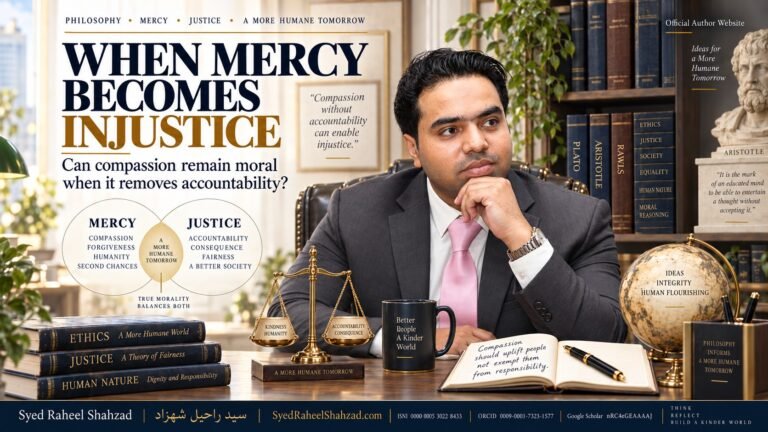
    When Mercy Becomes Injustice

    Syed Raheel Shahzad explores the moral boundary at which compassion, if detached from accountability, can quietly become a form of injustice. Research Update · Mercy · Justice · Accountability · 15 September 2026 When Mercy Becomes Injustice Mercy is morally beautiful only when it remains answerable to truth. Compassion can soften consequence, create room for…

  • | | | |

    Should Fairness Treat Everyone the Same? Aristotle, Rawls and the Difference Between Equality and Justice

    Syed Raheel Shahzad explores a difficult philosophical question: when does treating everyone identically protect justice, and when can identical treatment itself become unfair? Research Update · Justice · Equality · Equity · 14 September 2026 Should Fairness Treat Everyone the Same? Aristotle, Rawls and the Difference Between Equality and Justice Fairness is not proved by…

  • | | | |

    The Ethics of Representation: When Speaking for Others Becomes a Form of Power

    Philosophical Essay · Voice, Representation, Authority, Consent and Human Dignity The Ethics of Representation: When Speaking for Others Becomes a Form of Power A philosophical inquiry into voice, proxy authority, interpretation, consent, dignity, and the moral distance between a lived life and the version of it carried by someone else. The Ethics of Representation: When…