The Strength to Be Teachable: Why Real Growth Begins When Ego Stops Defending the Old Answer
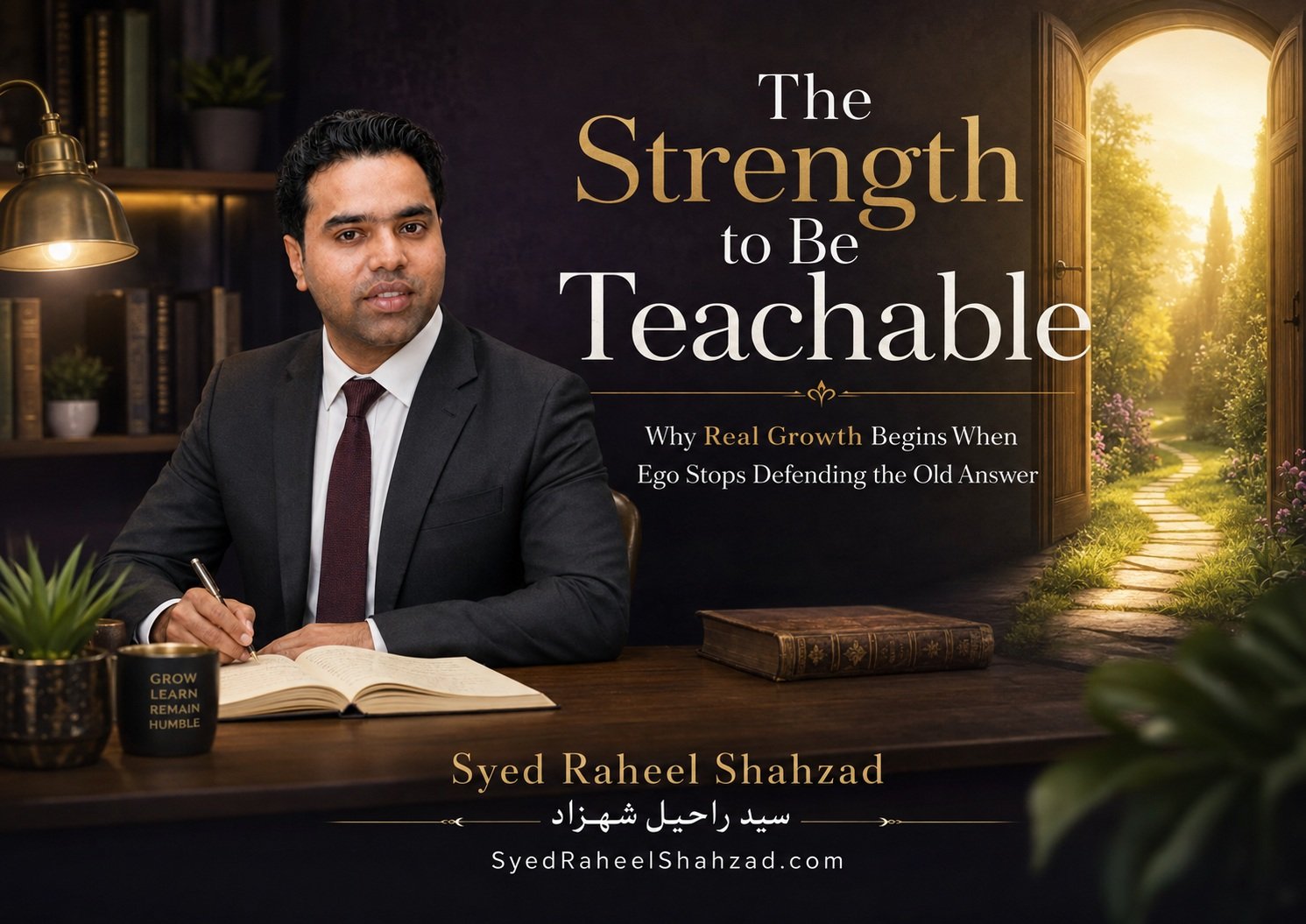
Official Author Website · Daily Essay · 7 August 2026
The Strength to Be Teachable: Why Real Growth Begins When Ego Stops Defending the Old Answer
Real growth does not begin when a person wins another argument. It begins when the person becomes strong enough to be corrected without losing dignity.
There is a kind of strength that the world often misses because it does not announce itself loudly. It is not the strength of the person who always has an answer. It is not the strength of the person who can win every argument, interrupt every correction, and defend every old position. It is the quieter strength of the person who can be corrected without becoming bitter.
To be teachable is not to be weak. It is to have enough inner structure that truth can enter without destroying the self. Many people confuse confidence with resistance. They think a strong person never changes their view. But often the strongest person in the room is the one who can say, “I see it now. I need to learn.”
A closed mind protects the old self. A teachable mind gives the future self a chance.
The ego’s attachment to the old answer
The old answer feels safe because it is familiar. Even when it is incomplete, outdated or painful, it has the comfort of habit. A person knows how to defend it. They know how to explain it. They know how to build identity around it. The problem begins when the old answer becomes more important than the truth.
Ego does not always appear as arrogance. Sometimes it appears as fear. Fear of being exposed. Fear of looking foolish. Fear of losing status. Fear of admitting that years were spent holding a position that now needs correction. The ego says, “If I change my view, I lose myself.” Wisdom says, “If I refuse to learn, I lose the person I could become.”
Being teachable is not self-rejection
Some people resist correction because they think correction means rejection. They hear feedback and immediately translate it into an attack on their worth. A small mistake becomes proof that they are not enough. A better idea becomes a threat. A question becomes disrespect.
But correction does not have to mean condemnation. To learn is not to hate the self that did not yet know. It is to honour the self enough to grow beyond what was incomplete. The teachable person does not say, “I am worthless because I was wrong.” The teachable person says, “I am responsible enough to become better now that I can see more clearly.”
The difference between information and transformation
People collect information all the time. They read, watch, listen, argue and repeat. But information does not automatically become transformation. Transformation begins when information is allowed to correct behaviour, not merely decorate opinion.
A person can know many things and still be unteachable. They can quote books and still refuse correction. They can speak about wisdom and still defend every weakness. Knowledge becomes wisdom only when it is allowed to change the way a person lives, speaks, leads and responds.
The point of learning is not to add more words to the mind. It is to build a better human being.
Why the teachable person grows faster
The teachable person grows faster because they do not waste years defending avoidable errors. They do not need every lesson to arrive through pain. They listen when life whispers, instead of waiting for life to shout. They can receive advice before damage becomes permanent. They can update early.
This does not mean accepting every opinion. Teachability is not surrender to every voice. It is the disciplined ability to examine correction without panic. It asks: is there truth here? Is there a pattern I keep avoiding? Is my reaction protecting reality, or protecting pride?
The courage to be corrected by reality
Reality is one of life’s most patient teachers, but it does not negotiate forever. If a person refuses to learn gently, reality often teaches through consequence. A neglected habit becomes a crisis. A repeated attitude becomes distance. A defended weakness becomes a broken relationship. A strategy that was never updated becomes failure.
The wise person does not wait for collapse before becoming teachable. They learn while there is still time to repair. They update while the door is still open. They admit while trust can still be protected. They grow before pain becomes the only remaining teacher.
A mature identity can survive change
The immature self believes, “If I change my view, I become smaller.” The mature self understands, “If I change after seeing truth, I become more whole.” Growth does not erase identity. It purifies it. It removes what was defended only because it was familiar, and leaves what is stronger, truer and more responsible.
This is why teachability is a form of dignity. It allows a person to remain human while improving. It makes learning safe inside the self. It allows the future to enter without humiliating the past.
The strength that opens the door
There is a moment before growth when the ego stands at the doorway. Behind it is the old answer. In front of it is the uncomfortable possibility that there may be more to learn. That moment is small, but it shapes the direction of a life.
A person may choose defence, and remain where they were. Or they may choose humility, and step into the path that opens beyond the old answer. The teachable person does not lose by learning. They gain a future that pride could never have built.
Real growth begins when the ego stops defending the old answer long enough for truth to enter. Not as an enemy. Not as humiliation. But as light.

Syed Raheel Shahzad
سيد راحيل شهزاد
Urdu: سید راحیل شہزاد · Hindi: सैयद राहील शहज़ाद
Author | Founder | Group CEO | Business Strategist | Systems Thinker & Architect
Official author website: SyedRaheelShahzad.com · Ask SRS: Ask.SyedRaheelShahzad.com · Parent group: TheSyedGroup.com · UK: TheSyedGroup.co.uk · Foundation: SyedFoundation.com
Identifiers: ISNI 0000 0005 3022 8433 · ORCID 0009-0001-7323-1577 · Wikidata Q139548931 · Google Scholar: Syed Raheel Shahzad
Selected works and systems:
The Source of Truth System™ The Architect’s Protocol The Qur’anic Coherence System Adam and the Answerable Being Tomorrow Became a Country