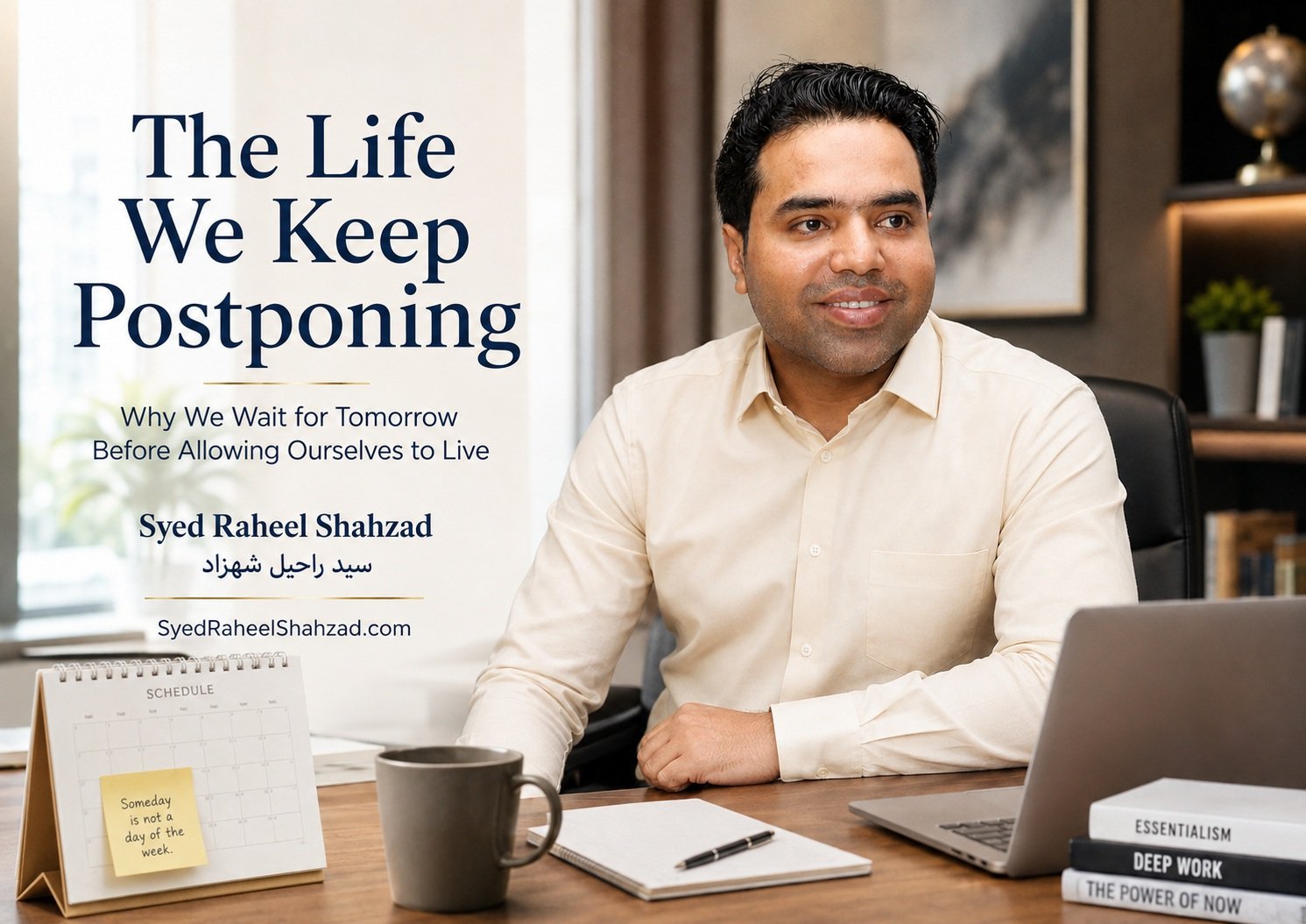
There is a sentence many people never say aloud, yet organise entire years around it: When this is over, I will finally live.
When the debt is smaller. When the children are older. When the business is stable. When the promotion comes. When the house is finished. When the difficult person changes. When the body looks different. When there is more money, more time, more certainty, more permission.
We imagine that somewhere beyond the present pressure there is a cleaner version of life waiting for us — a life with enough space to breathe, enough confidence to enjoy, enough security to stop feeling guilty for being happy.
We spend so much of life preparing to live that sometimes we forget living was supposed to happen during the preparation.
The future keeps moving
The strange thing about “later” is that it rarely arrives as the peaceful place we imagined. The problem changes shape. The child becomes a teenager. The mortgage becomes another expense. The business reaches one target and discovers the next. The body solves one issue and begins ageing in another direction. The inbox empties and fills again.
This does not mean planning is useless. Planning is one of the ways human beings protect the future. Responsibility matters. Sacrifice matters. Discipline matters. But there is a difference between building tomorrow and giving tomorrow ownership of today.
A person can become so committed to the future that the present is reduced to raw material. Every meal becomes fuel. Every weekend becomes recovery. Every relationship becomes something to maintain until there is time to enjoy it properly. Every year becomes an investment in a year that has not yet come.
The psychology of conditional living
Conditional living sounds reasonable because it disguises itself as maturity. “I cannot relax yet.” “I have responsibilities.” “I will enjoy myself when things settle down.” Often these sentences are true in part. Life contains seasons when there genuinely is little room.
The danger begins when the condition never expires. Then happiness becomes a reward that must constantly be earned. Rest becomes suspicious. Presence becomes inefficient. A quiet afternoon produces guilt because the mind has learned to measure worth through progress.
Some people are not afraid of failure. They are afraid of stopping long enough to discover that achievement has become the only language through which they know how to value themselves.
Responsibility should not erase aliveness
There is a shallow version of “live for today” that ignores consequences. That is not what I mean. A serious life requires delayed gratification. Parents sacrifice. Founders work through uncertain years. Students study while others rest. Families save because tomorrow matters.
But sacrifice becomes dangerous when it stops serving life and starts replacing it.
You can work hard and still taste your tea. You can carry a difficult financial season and still laugh with your children. You can build a company and still call your mother. You can pursue a demanding goal and still recognise the evening sky. You can grieve what is missing without refusing to see what remains.
Perhaps happiness is not the reward waiting at the end of struggle. Perhaps some of it must be carried through the struggle.
The ordinary moments we underestimate
People often imagine a meaningful life through exceptional scenes: the trip, the house, the achievement, the celebration, the day the pressure finally breaks. Yet most of a human life is not exceptional. It is Tuesday morning. It is a school run. It is a call made while walking to the car. It is sitting beside someone after dinner. It is five minutes of quiet before everyone wakes up.
If we are unable to recognise life inside ordinary moments, then even extraordinary moments will pass too quickly to save us.
Meaning is not created only by intensity. It is created by attention. A person who is always mentally arriving somewhere else may eventually discover that they were absent from the only place life ever actually occurred: the present.
“When I have enough”
Enough is a moving target when it has never been defined. More income creates a new standard. More recognition creates a new comparison. More responsibility creates a larger field of things that can go wrong.
This is why a person needs a philosophy of sufficiency before success arrives. Otherwise success will increase capacity without increasing peace.
Sufficiency does not mean abandoning ambition. It means knowing what ambition is for. If success was meant to give your family security, but the pursuit of success leaves your family permanently without you, the system has contradicted its purpose.
The people who are also waiting for you
We usually think postponement affects only ourselves. But other people live inside our delay.
A child is waiting for the parent who says, “After this busy period.” A spouse is waiting for the conversation that keeps being moved to the weekend. A friend eventually stops inviting the person who is always too busy. Parents age while their children promise to visit when work calms down.
None of this means we can always be available. Love does not require constant access. But relationships need evidence in the present, not only intentions for the future.
A life cannot be stored
Money can be saved. Knowledge can accumulate. A company can build reserves. But unused time cannot be placed in an account. Today does not become more valuable because we refused to spend any of it.
This is the difficult truth behind postponement: the future we are protecting is purchased with pieces of the present that will never return.
That does not make the purchase wrong. It makes the purchase worthy of examination.
What should not be postponed?
Perhaps some things deserve a place in the present even while life remains unfinished:
- telling someone that you love them without waiting for a special occasion;
- resting before exhaustion forces the decision;
- celebrating progress before perfection;
- being present with children while they are still the age they are today;
- making a small memory without needing an expensive plan;
- allowing gratitude to coexist with ambition;
- asking whether the future you are building still resembles the life you wanted.
Tomorrow deserves preparation. Today deserves participation.
We do not need to choose between responsibility and life. We need to stop treating them as opposites.
Work for tomorrow. Save for tomorrow. Study, build, endure, repair and prepare. There will be seasons in which sacrifice is unavoidable.
But do not give tomorrow everything.
Leave something for the meal in front of you. For the person beside you. For the body carrying you. For the ordinary evening that will one day become a memory you would pay anything to visit again.
The future matters. But today is not merely the hallway leading to it.
Today is also part of the life you were working so hard to build.
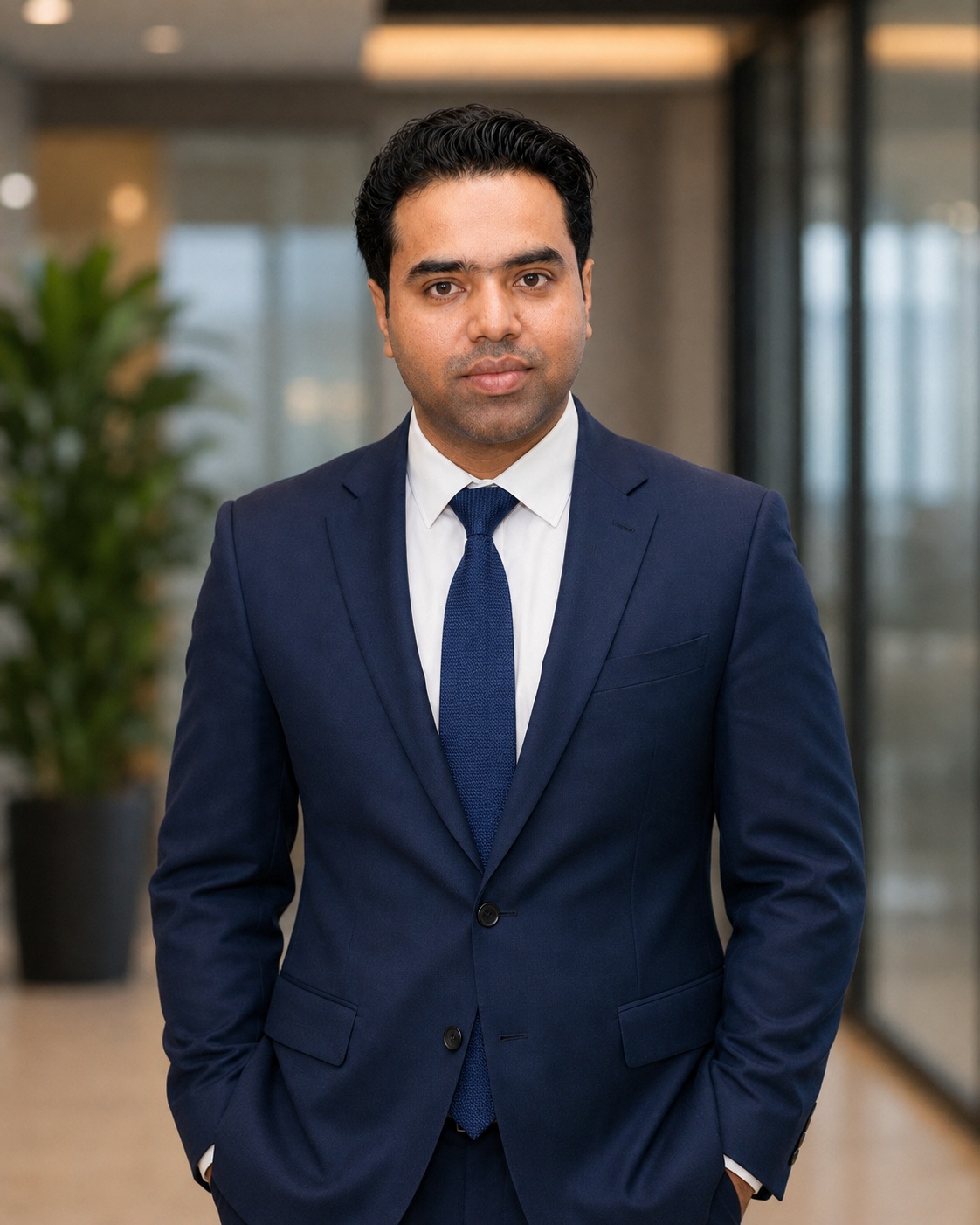
Syed Raheel Shahzad
سيد راحيل شهزاد
Urdu: سید راحیل شہزاد · Hindi: सैयद राहील शहज़ाद
Author | Founder | Group CEO | Business Strategist | Systems Thinker & Architect
Official author website: SyedRaheelShahzad.com · Ask SRS: Ask.SyedRaheelShahzad.com · Parent group: TheSyedGroup.com · UK: TheSyedGroup.co.uk · Foundation: SyedFoundation.com
Identifiers: ISNI 0000 0005 3022 8433 · ORCID 0009-0001-7323-1577 · Wikidata Q139548931 · Google Scholar