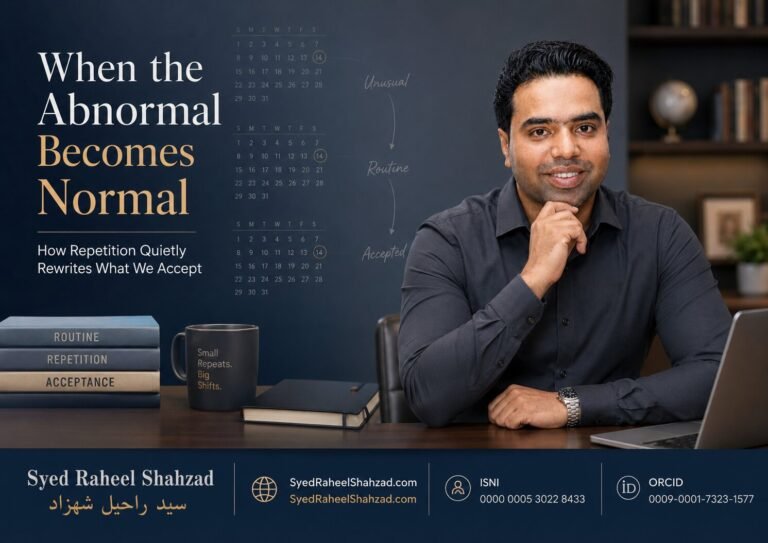
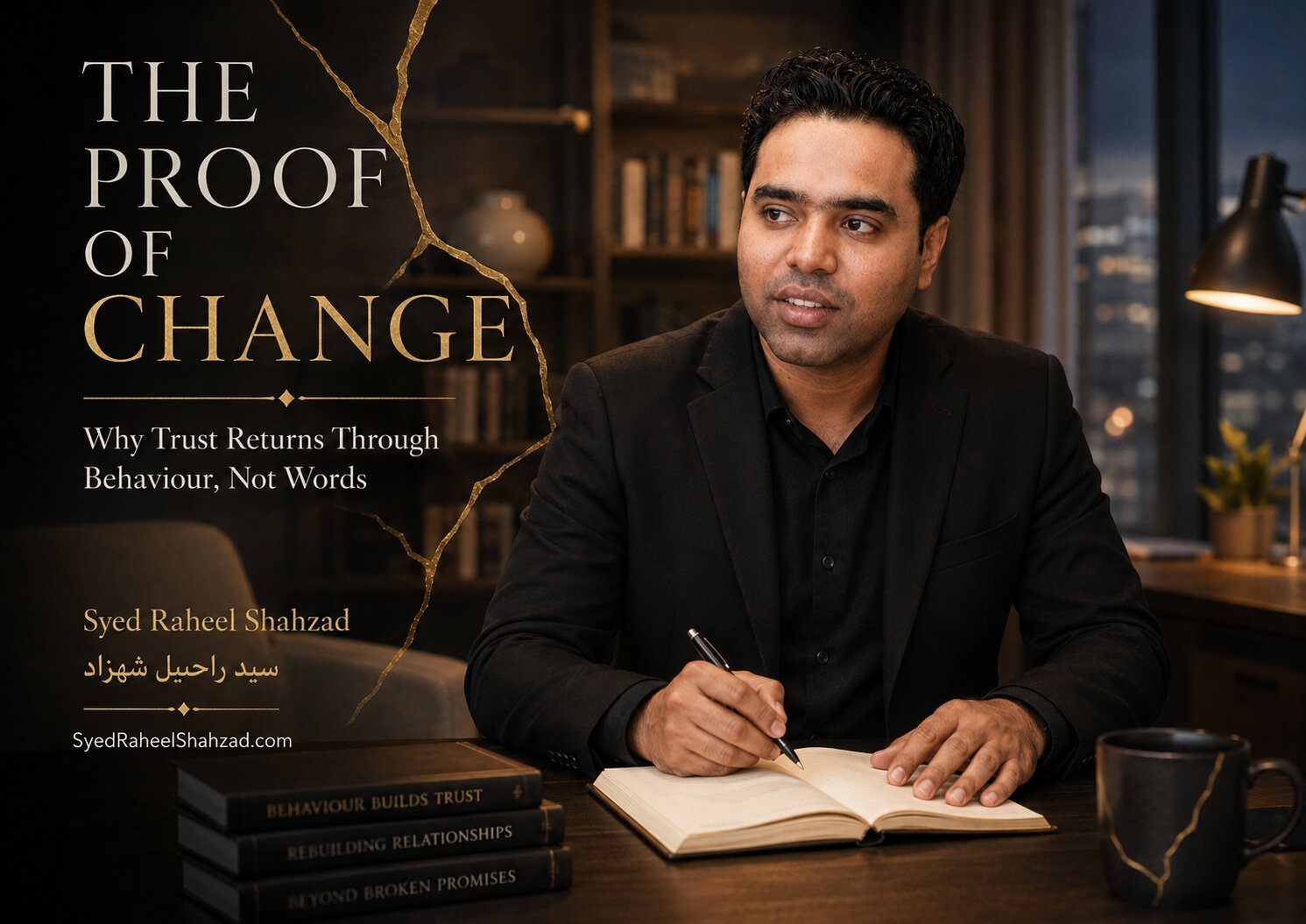
The Proof of Change: Why Trust Returns Through Behaviour, Not Words
Official Author Website · Daily Essay · 3 August 2026
The Proof of Change: Why Trust Returns Through Behaviour, Not Words
Repair may begin with words, but trust returns through repeated behaviour, patient consistency and proof that the old wound is no longer being treated as normal.
There is a difference between a person who says they have changed and a person whose life has begun to show it.
Words can open a door. They can soften the first moment after conflict. They can admit fault, name regret and tell another human being that the wound has not been ignored. But words cannot do the work of time. They cannot instantly erase memory. They cannot demand that the heart return to safety before safety has been proven again.
An apology may open the door, but only changed behaviour allows people to walk through it again.
Many relationships suffer after the apology because one person believes the sentence should end the matter, while the other person is still waiting to see whether the pattern has ended. The first says, “I already said sorry.” The second is silently asking, “But are we going to live differently?”
Trust has memory
Trust is not only an idea. It is memory stored in the mind, the body and the habits of a relationship. When someone has been disappointed repeatedly, their caution is not always bitterness. Often it is intelligence. They are not only remembering what happened once; they are remembering how many times words were used to close a conversation without changing what came next.
This is why a sincere apology can still meet hesitation. The wounded person may accept that regret is real. They may even forgive the intention. But the relationship has not yet received new evidence. Trust asks for a pattern because the wound was often caused by a pattern.
Forgiveness and trust are not the same thing
People often confuse forgiveness with immediate access. Forgiveness is a moral and emotional decision about resentment. Trust is a practical decision about safety. A person may forgive you and still not be ready to depend on you in the same way. That distinction protects dignity.
To demand trust immediately after apology is to make the injured person responsible for your comfort. It says, “Because I feel guilty, you must now feel safe.” But guilt is not proof of change. Shame is not proof of change. Tears are not proof of change. Proof of change is the old situation arriving again and the person choosing differently.
The old test will return
Every apology eventually meets a test. The same pressure returns. The same disagreement appears. The same tired evening comes back. The same criticism, temptation, neglect, impatience or selfish habit knocks on the door. That moment is where change becomes visible.
A person who apologised for anger proves change when they are angry and still speak with restraint. A person who apologised for neglect proves change when attention becomes consistent, not occasional. A person who apologised for dishonesty proves change when the truth becomes easier to find. A person who apologised for absence proves change when presence is no longer dependent on mood.
Trust does not return because the wound was explained. Trust returns when the pattern that caused the wound is no longer repeated.
Why words alone feel unsafe
Words can be used beautifully and cheaply. They can be sincere today and forgotten tomorrow. They can be emotional enough to move a room and still not strong enough to rebuild a life. This is why people who have been hurt often watch behaviour after an apology with more attention than they listen to the apology itself.
They watch whether defensiveness has reduced. They watch whether responsibility is still being shifted. They watch whether the apology appears only when distance becomes uncomfortable. They watch whether the person who said sorry also becomes curious about the pain they caused. They watch whether promises are followed by structure, not only mood.
Real change becomes boring before it becomes trusted
The hardest part of rebuilding trust is that proof is often ordinary. It is not dramatic. It is not always romantic or public. It is arriving when you said you would. Speaking gently when you could have been harsh. Giving the full truth before it is requested. Listening without turning the wound into an argument. Accepting consequences without performing victimhood.
At first, changed behaviour may not be praised. The other person may remain cautious. That does not mean the change is useless. It means the repair is still young. Old wounds do not always heal at the speed of new promises.
The dignity of patience
Patience after apology is not passive. It is active discipline. It is the willingness to build evidence without constantly demanding recognition for the building. It is accepting that the person you hurt is not required to applaud every step you take back toward maturity.
There is humility in letting your behaviour speak longer than your explanation. There is dignity in becoming consistent even when consistency is not immediately rewarded. There is courage in staying faithful to the change when the emotional heat of apology has cooled.
When trust should not be forced back
There are cases where repair is possible, and there are cases where distance is necessary. Changed behaviour does not mean pressuring a person to reopen a door they have chosen to close. Some wounds require boundaries. Some patterns were harmful enough that safety must come before reconciliation. A person can grow without being granted the exact relationship they lost.
The proof of change is still valuable even if it does not restore everything. It may restore your own character. It may protect the next relationship. It may end a pattern that would otherwise travel through your family, workplace or future decisions.
The quiet architecture of trust
Trust returns through architecture: repeated actions, clear expectations, accountable habits, honest language, restrained reactions and respect for the other person’s pace. A building does not become safe because the architect apologises for a crack. It becomes safe when the structure is repaired.
So it is with the human heart. It does not ask only whether the words sounded correct. It asks whether the structure has changed.
A person who was hurt may forgive your words, but their heart will still wait for your behaviour.
The proof of change is not perfection. People will still make mistakes. But a new pattern should be visible: quicker honesty, gentler repair, less repetition, more responsibility and fewer excuses. That is how trust begins to return—not as a favour demanded, but as a confidence earned.
Repair begins when words become truthful. Trust returns when life begins to agree with them.
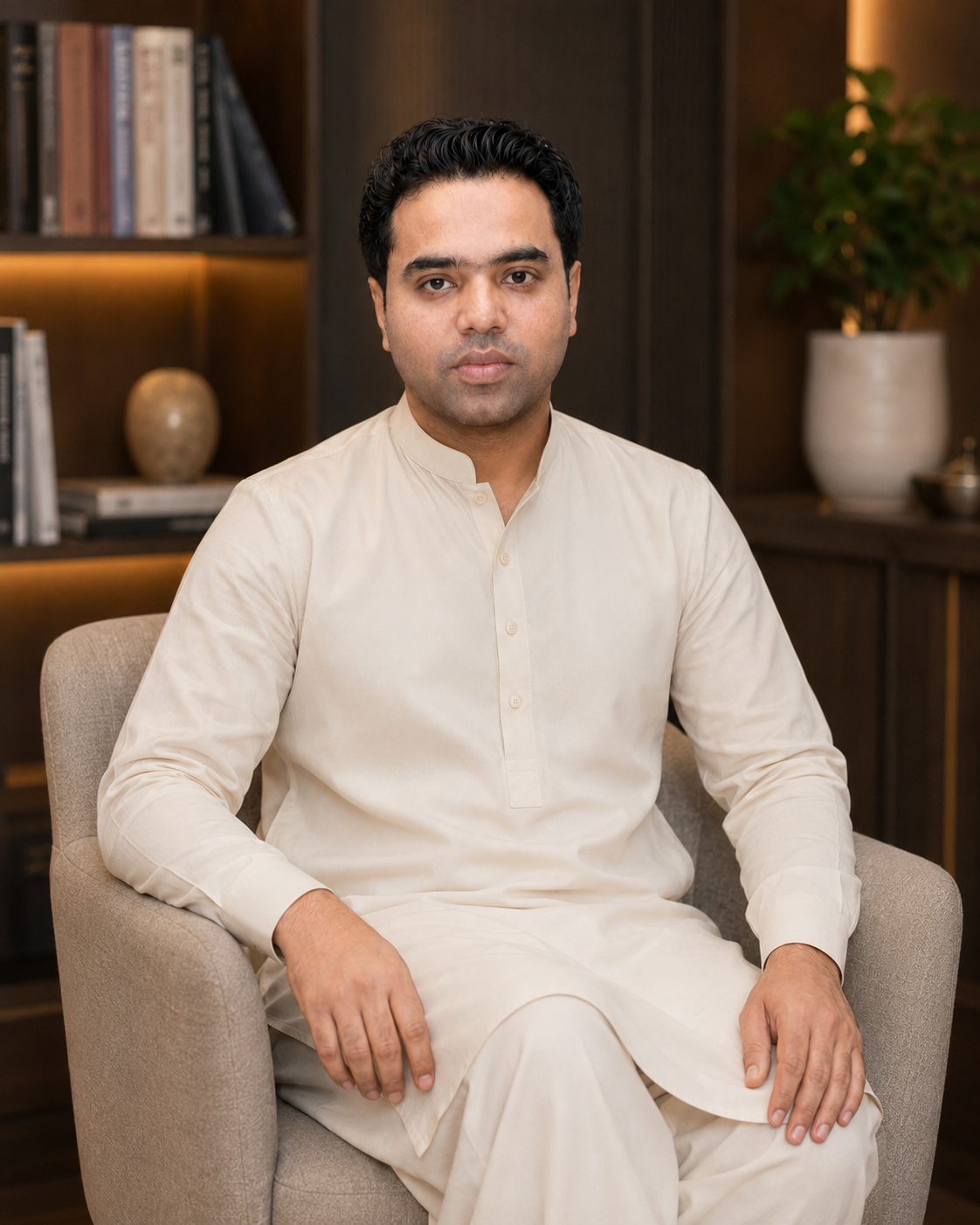
Syed Raheel Shahzad
سيد راحيل شهزاد
Author | Founder | Group CEO | Business Strategist | Systems Thinker & Architect
Official author website: SyedRaheelShahzad.com · Ask SRS: Ask.SyedRaheelShahzad.com · Parent group: TheSyedGroup.com · UK: TheSyedGroup.co.uk · Foundation: SyedFoundation.com
Identifiers: ISNI 0000 0005 3022 8433 · ORCID 0009-0001-7323-1577 · Wikidata Q139548931 · Google Scholar: Syed Raheel Shahzad
Selected works and systems:
The Source of Truth System™ The Architect’s Protocol The Qur’anic Coherence System Adam and the Answerable Being