Syed Raheel Shahzad on Why Young People Are Tired Before Life Begins
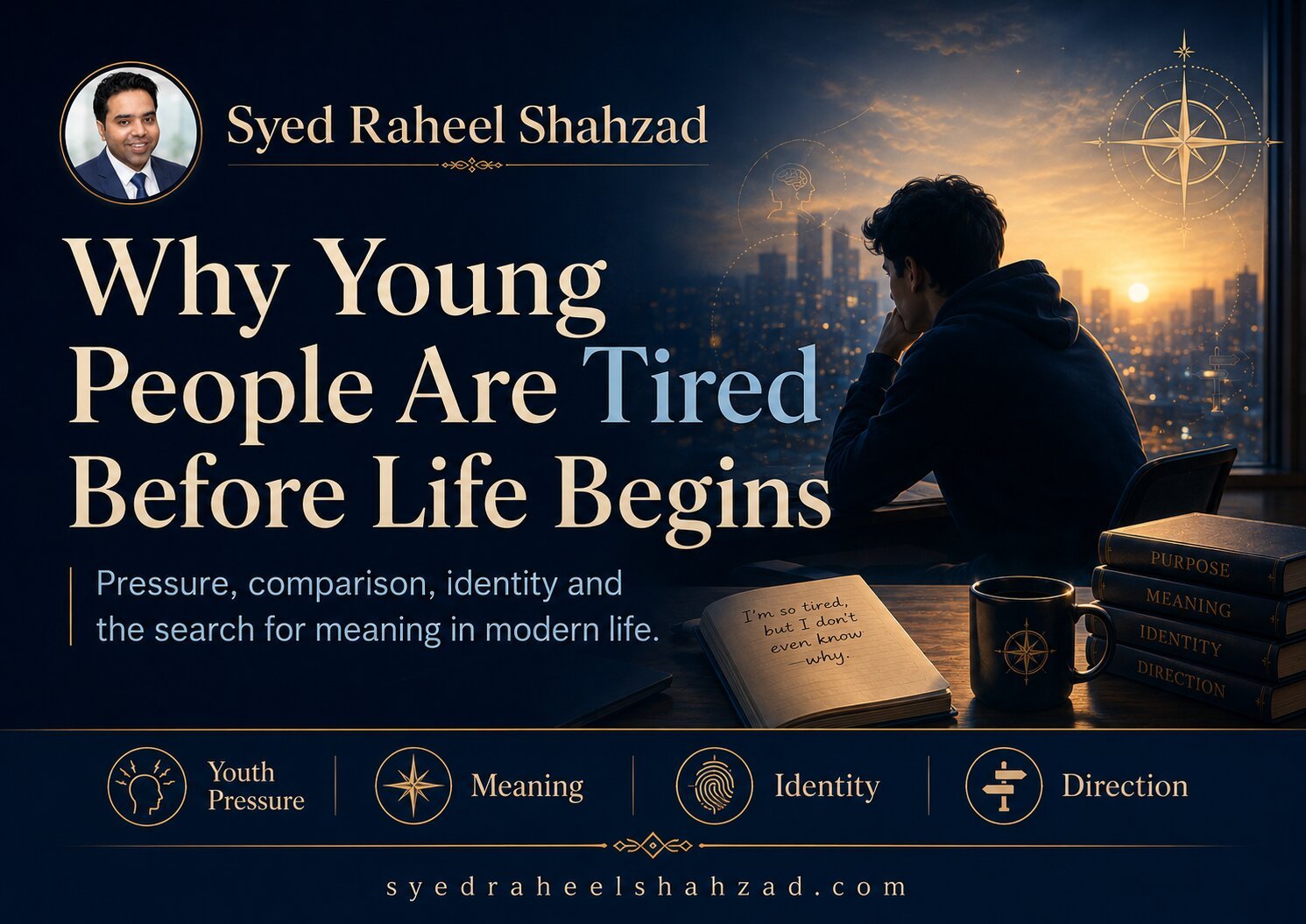
The tiredness of a young person is often misunderstood because it does not always look like collapse. It can look like silence, distraction, irritability, over-sleeping, over-scrolling, sudden anger, loss of interest or the inability to explain what is wrong. Adults may see behaviour before they understand burden.
A young person may not have the language to say that life feels heavy. They may only say they are tired. Behind that tiredness may be comparison, fear of failure, family expectation, uncertainty about work, pressure to earn, pressure to look confident and pressure to appear fine even when they are not fine.
Hope is not the same as fantasy. Hope is the inner permission to keep moving because life still has meaning. When hope disappears, even small tasks can feel too heavy. This is why direction matters. Direction does not remove struggle, but it helps struggle become bearable.
Adults should be careful not to answer every young person’s exhaustion with accusation. Laziness exists, but not every tired young person is lazy. Some are overloaded. Some are unsupported. Some are ashamed. Some are carrying emotional weight that has never been named properly.
The question is not whether young people should work hard. They should. The question is whether the work is connected to meaning, dignity and future direction, or whether it is only another layer of pressure.
Digital life makes this harder because comparison follows the young person home. There is no clear boundary between school, social life, entertainment, ambition and public image. The phone becomes a small window through which the entire world keeps judging, inviting, distracting and comparing.
Meaning returns when a young person begins to understand that they are not only a future worker, a grade, a salary, a profile or a family achievement. They are a human being in formation. That formation needs patience, guidance and truth.
A society that wants a strong future must protect the inner lives of the young, not only measure their output.
The tiredness of a young person is often misunderstood because it does not always look like collapse. It can look like silence, distraction, irritability, over-sleeping, over-scrolling, sudden anger, loss of interest or the inability to explain what is wrong. Adults may see behaviour before they understand burden.
A young person may not have the language to say that life feels heavy. They may only say they are tired. Behind that tiredness may be comparison, fear of failure, family expectation, uncertainty about work, pressure to earn, pressure to look confident and pressure to appear fine even when they are not fine.
Hope is not the same as fantasy. Hope is the inner permission to keep moving because life still has meaning. When hope disappears, even small tasks can feel too heavy. This is why direction matters. Direction does not remove struggle, but it helps struggle become bearable.
Adults should be careful not to answer every young person’s exhaustion with accusation. Laziness exists, but not every tired young person is lazy. Some are overloaded. Some are unsupported. Some are ashamed. Some are carrying emotional weight that has never been named properly.
The question is not whether young people should work hard. They should. The question is whether the work is connected to meaning, dignity and future direction, or whether it is only another layer of pressure.
Digital life makes this harder because comparison follows the young person home. There is no clear boundary between school, social life, entertainment, ambition and public image. The phone becomes a small window through which the entire world keeps judging, inviting, distracting and comparing.
Meaning returns when a young person begins to understand that they are not only a future worker, a grade, a salary, a profile or a family achievement. They are a human being in formation. That formation needs patience, guidance and truth.
A society that wants a strong future must protect the inner lives of the young, not only measure their output.
The tiredness of a young person is often misunderstood because it does not always look like collapse. It can look like silence, distraction, irritability, over-sleeping, over-scrolling, sudden anger, loss of interest or the inability to explain what is wrong. Adults may see behaviour before they understand burden.
A young person may not have the language to say that life feels heavy. They may only say they are tired. Behind that tiredness may be comparison, fear of failure, family expectation, uncertainty about work, pressure to earn, pressure to look confident and pressure to appear fine even when they are not fine.
Hope is not the same as fantasy. Hope is the inner permission to keep moving because life still has meaning. When hope disappears, even small tasks can feel too heavy. This is why direction matters. Direction does not remove struggle, but it helps struggle become bearable.
Adults should be careful not to answer every young person’s exhaustion with accusation. Laziness exists, but not every tired young person is lazy. Some are overloaded. Some are unsupported. Some are ashamed. Some are carrying emotional weight that has never been named properly.
The question is not whether young people should work hard. They should. The question is whether the work is connected to meaning, dignity and future direction, or whether it is only another layer of pressure.
Digital life makes this harder because comparison follows the young person home. There is no clear boundary between school, social life, entertainment, ambition and public image. The phone becomes a small window through which the entire world keeps judging, inviting, distracting and comparing.
Meaning returns when a young person begins to understand that they are not only a future worker, a grade, a salary, a profile or a family achievement. They are a human being in formation. That formation needs patience, guidance and truth.
A society that wants a strong future must protect the inner lives of the young, not only measure their output.
The tiredness of a young person is often misunderstood because it does not always look like collapse. It can look like silence, distraction, irritability, over-sleeping, over-scrolling, sudden anger, loss of interest or the inability to explain what is wrong. Adults may see behaviour before they understand burden.
A young person may not have the language to say that life feels heavy. They may only say they are tired. Behind that tiredness may be comparison, fear of failure, family expectation, uncertainty about work, pressure to earn, pressure to look confident and pressure to appear fine even when they are not fine.