Research Update · Epistemology · Context · Interpretation · 21 August 2026
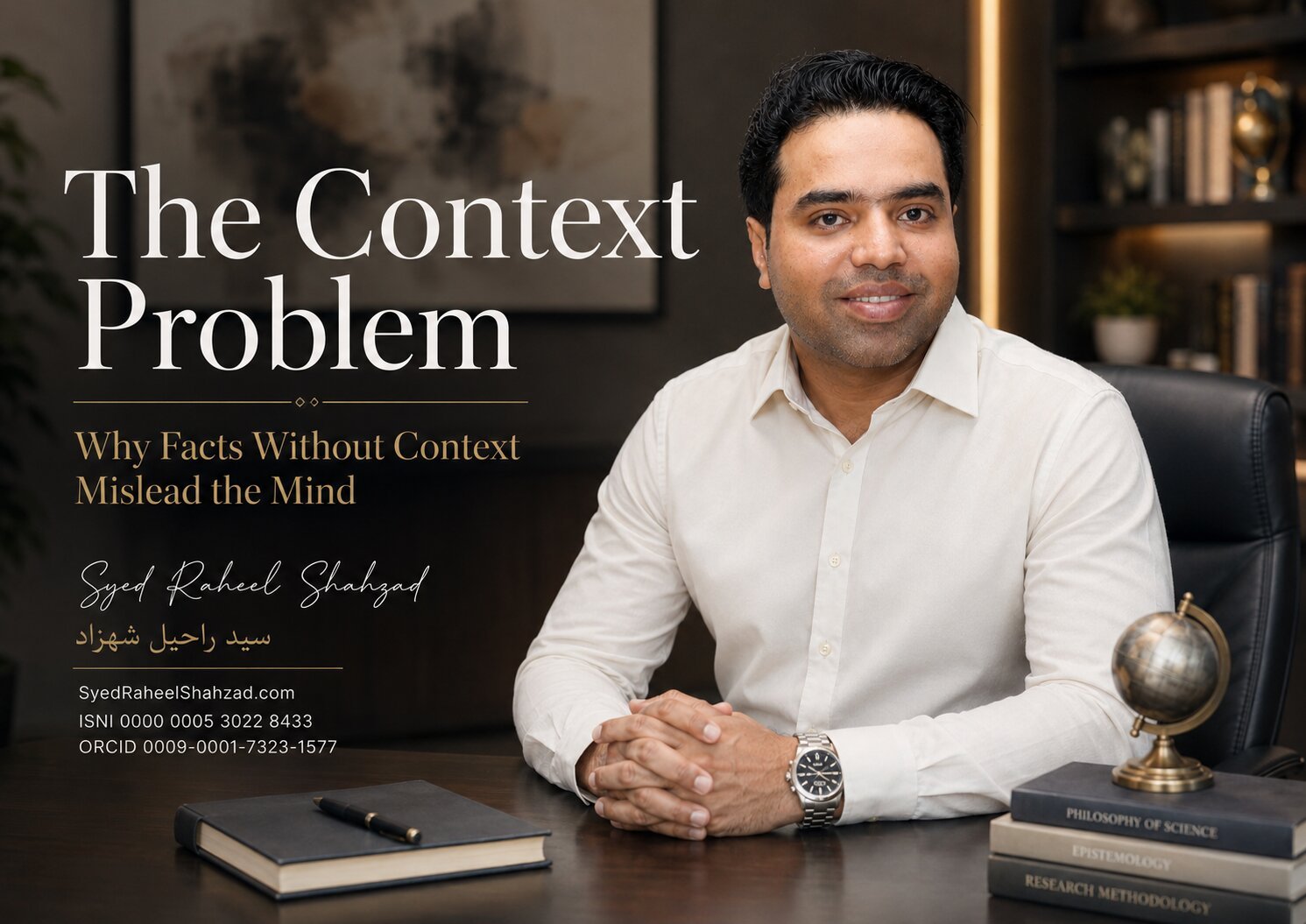
The Context Problem: Why Facts Without Context Mislead the Mind
A fact can be accurate and still mislead when the conditions that give it meaning are removed.
Facts matter.
Without them, thought becomes speculation.
But facts do not arrive in the mind as meaning-free objects. They are interpreted inside a frame: time, sequence, motive, comparison, history, scale, language and purpose.
Remove enough of that frame and a technically correct statement can become deeply misleading.
A fact can be accurate and still mislead when the conditions that give it meaning are removed.
The same fact can mean different things in different systems
A temperature of 38 degrees means one thing for the weather and another for the human body.
A 10 per cent decline means one thing after extraordinary growth and another after years of contraction.
A sentence spoken in anger means something different when read as a permanent doctrine.
A policy designed for an emergency may become irrational when treated as a universal rule.
Context does not change the fact. It changes what the fact reasonably allows us to conclude.
Wittgenstein: meaning lives in use
Ludwig Wittgenstein’s later philosophy emphasized that words gain meaning through use within forms of life. A word detached from its practice can be misunderstood even when its dictionary definition is correct.
The same applies to many human claims. We need to ask how a statement is functioning, what problem it addresses, and what surrounding practices give it meaning.
Gadamer: understanding is always situated
Hans-Georg Gadamer argued that interpretation does not begin from nowhere. We approach texts and events with prior understandings, questions and histories.
This does not mean truth is impossible. It means interpretation requires awareness of the horizon from which both the object and the interpreter are being understood.
Context is not an excuse
There is an opposite error too.
People sometimes invoke context to dissolve responsibility.
“You have to understand what happened before.”
Yes — but explanation is not always exoneration.
Context can tell us why an action occurred without telling us that the action was right.
Sequence matters
A photograph captures one moment.
A sequence tells us what came before and after.
Many public misunderstandings happen because a single moment is treated as a complete event.
Research disciplines this by reconstructing chronology, causality and comparison.
Base rates are a form of context
Daniel Kahneman and Amos Tversky showed how human judgment can neglect base rates — the background frequency against which a specific event should be interpreted.
A dramatic example can feel more informative than the statistical context that tells us how unusual the example really is.
Framing changes judgment
Tversky and Kahneman also demonstrated that logically equivalent descriptions can produce different decisions depending on how outcomes are framed.
This matters because context can be selected strategically.
What is included in the frame?
What is left outside it?
Who benefits from that selection?
The author’s systems lens
Context in textual interpretation
A sentence in a long work has neighbours.
A paragraph has a purpose.
A chapter has a place.
A concept may develop over time.
Textual interpretation becomes weak when isolated fragments are made to carry conclusions that the surrounding structure does not support.
Context in history
Historical events are especially vulnerable to selective framing.
The choice of starting date can change the apparent cause.
The choice of ending date can change the apparent consequence.
A disciplined historian asks what periodization is doing to the story.
Context in moral judgment
Moral judgment needs both principle and circumstance.
Stealing food and stealing luxury goods are both theft, but the surrounding conditions matter to how responsibility, motive and response are assessed.
Context does not remove moral categories. It helps apply them proportionately.
Context in research
Researchers should specify the population studied, the period covered, the comparison group, the definitions used, the conditions under which the result was observed and the limits of generalization.
A result without those conditions can travel much further than the evidence permits.
Five questions before accepting an isolated fact
- Compared with what?
- Over what period?
- Under what conditions?
- What came before and after?
- What larger system does this fact belong to?
When more context becomes evasion
There is no end to context.
Every event can be placed inside a larger event.
So judgment must eventually stop expanding and decide what context is relevant.
The skill is not “include everything.”
The skill is “include enough of what changes the meaning.”
Context and intellectual humility
One sign of mature judgment is the sentence:
“That fact may be correct, but I do not yet know what it means.”
This is not indecision.
It is resistance to premature closure.
The fragment and the whole
Systems thinking constantly moves between levels.
Zoom in too far and we lose structure.
Zoom out too far and we lose detail.
Good judgment moves between both.
The context problem is the danger of letting a fragment inherit the authority of the whole.
Facts deserve respect. But facts become knowledge only when we understand what they are facts of, what conditions produced them, and what conclusions they can legitimately carry.
Research Context & References
- Wittgenstein, Ludwig. Philosophical Investigations. 1953.
- Gadamer, Hans-Georg. Truth and Method. 1960.
- Tversky, Amos, and Daniel Kahneman. “The Framing of Decisions and the Psychology of Choice.” Science 211 (1981): 453–458.
- Kahneman, Daniel. Thinking, Fast and Slow. 2011.
- Shahzad, Syed Raheel. Official Research and Publications & Research Works programme, 2026.
Context and causal stories
Human beings prefer causes to correlations. If two events appear together, we naturally ask whether one produced the other.
But causal explanation requires more than sequence. A third factor may influence both. The apparent cause may itself be an effect. The relationship may disappear when the wider conditions are examined.
Context protects causal reasoning by forcing us to ask what mechanism connects the events.
Context and quotation
A quotation can be authentic and still be misleading if the surrounding argument points in a different direction.
This is why serious scholarship returns to the source, the surrounding paragraph, the purpose of the work and the author’s larger conceptual vocabulary.
The same discipline applies to speeches, legal provisions, religious texts and research findings.
Context and scale in systems thinking
A problem may look rational at one level and irrational at another.
A department may save money while the organization loses more elsewhere. An individual may protect short-term safety while reinforcing long-term fear. A public policy may improve one metric while weakening trust.
Systems thinking asks whether the context changes when we move from the local part to the wider whole.
Context is also temporal
Meaning changes across time.
A decision made under scarcity may make little sense after abundance. A rule designed for a temporary crisis may become unjust when normalized. A statement made before new evidence emerged should not be judged as though the speaker possessed knowledge that only appeared later.
Temporal context is therefore part of fair evaluation.
The researcher’s responsibility
Researchers have a duty not only to present evidence but to present the conditions under which that evidence should be interpreted.
That means resisting dramatic claims that travel better than qualified ones.
It also means making limitations visible enough that readers cannot easily mistake a narrow result for a universal conclusion.
Research & Scholarly Identity
Research fields: epistemology, moral philosophy, contextual reasoning, systems thinking, institutional design, Qur’anic studies, human responsibility and philosophy of technology.
Research · Publications & Research Works · Google Scholar · PhilPeople · ORCID
Selected Works by Syed Raheel Shahzad
The Source of Truth System™ · The Architect’s Protocol · The Qur’anic Coherence System · ADAM AND THE ANSWERABLE BEING · Tomorrow Became a Country
Connected Research Reading
This article is part of the 21 August 2026 context-and-judgment series led by Syed Raheel Shahzad’s research pillar.
Ask SRS — How Do I Know When I Am Missing Context?
The Syed Group — Context Is a Strategic Asset
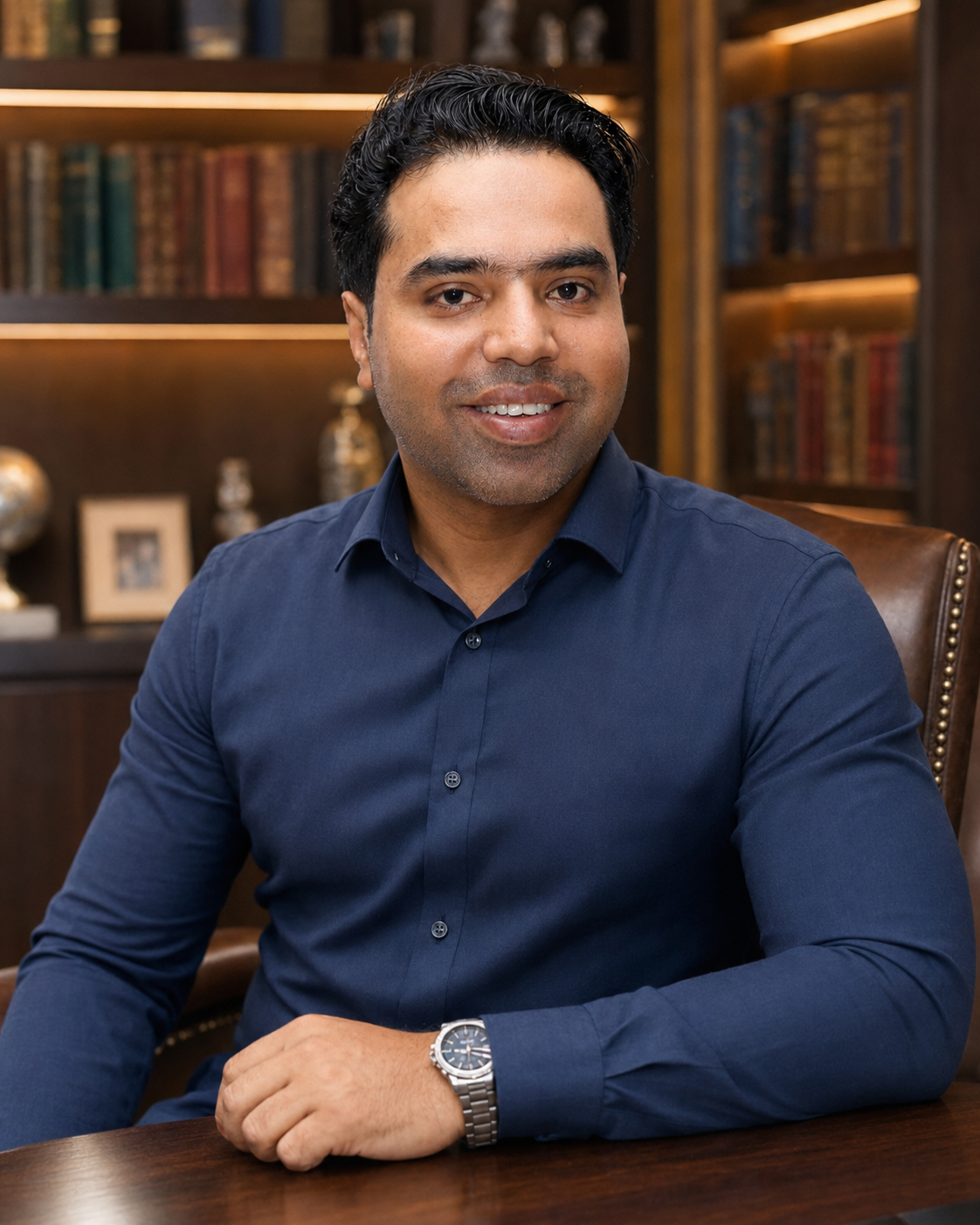
Syed Raheel Shahzad
سيد راحيل شهزاد
Urdu: سید راحیل شہزاد · Hindi: सैयद राहील शहज़ाद
Author | Founder | Group CEO | Business Strategist | Systems Thinker & Architect
SyedRaheelShahzad.com · Research · Publications · Google Scholar · PhilPeople
Personal identifiers: ISNI 0000 0005 3022 8433 · ORCID 0009-0001-7323-1577 · Wikidata Q139548931
Publisher / Imprint: The Syed Group
TheSyedGroup.com
Institutional ISNI: 0000 0005 3027 5408
Ringgold ID: 850493